Support Groups in 63146
Mental Health Evaluation is a series of questions that a professional ask so one can be diagnosis.

Mental Health Evaluation is a series of questions that a professional ask so one can be diagnosis.
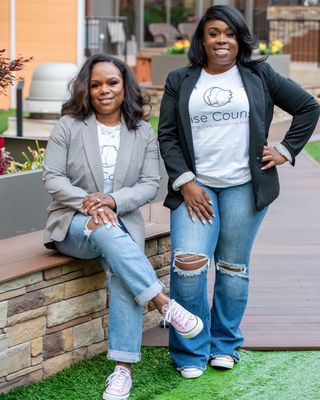
Attention Couples: Cecilia and Carmel are both licensed therapists, both are married with more than 30 years of marriage combined, and more than 25 years of clinical experience combined. We are inviting veteran couples, newlyweds, couples having conflict, or if you rarely feel disconnected in your relationship. All couples are welcome and having relationship problems is not a requirement to attend. Let’s have fun, support each other, and learn from one another while strengthening our relationships. #wisecounsel

Hosted by Cecilia D Carter
Licensed Professional Counselor, MA, LPC
Group meets in Saint Louis, MO 63146
Attention Couples: Cecilia and Carmel are both licensed therapists, both are married with more than 30 years of marriage combined, and more than 25 years of clinical experience combined. We are inviting veteran couples, newlyweds, couples having conflict, or if you rarely feel disconnected in your relationship. All couples are welcome and having relationship problems is not a requirement to attend. Let’s have fun, support each other, and learn from one another while strengthening our relationships. #wisecounsel
This group focuses on a multitude of issues with which a woman is confronted during the transitions of her life. Ranging from relationship issues, abuse, depression, divorce, grief, children, empty nest, etc. The average number in group is five, and the group is ongoing, solution focused, and helps by allowing each individual ample but limited time to discuss her issues and have her turn for individual time with the therapist. When we experience emotions which become debilitating in our daily life, given the opportunity, we will thrive in a group environment of growth and positive motivation. 12-16 weeks, normally

Hosted by Kathy V Guerra
Licensed Professional Counselor, MEd, LPC-S
Group meets in Saint Louis, MO 63146
This group focuses on a multitude of issues with which a woman is confronted during the transitions of her life. Ranging from relationship issues, abuse, depression, divorce, grief, children, empty nest, etc. The average number in group is five, and the group is ongoing, solution focused, and helps by allowing each individual ample but limited time to discuss her issues and have her turn for individual time with the therapist. When we experience emotions which become debilitating in our daily life, given the opportunity, we will thrive in a group environment of growth and positive motivation. 12-16 weeks, normally
Groups are offered on Stress, Anxiety, Grief and Loss, Couples, and Parenting. All groups are limited to 10 members at one time. Therapy is conducted in a CBT formati and last approximately 60-90 minutes. For any additional questions, please call or email.

Groups are offered on Stress, Anxiety, Grief and Loss, Couples, and Parenting. All groups are limited to 10 members at one time. Therapy is conducted in a CBT formati and last approximately 60-90 minutes. For any additional questions, please call or email.
Are you struggling with overthinking, emotional outbursts, chronic tension, unexplained physical pain, inability to focus or concentrate, unexplained physical pain, easily agitated, difficulty maintaining healthy relationships, difficulty turning your brain off at night resulting in inconsistent sleep patterns, or habitual procrastination? These symptoms, habits, and behaviors could be indicators of an anxiety disorder. If you are struggling with managing anxiety, our 5 week therapy group is for you! To enroll in our July session email is at wisecounsel.group@gmail.com.

Hosted by Cecilia D Carter
Licensed Professional Counselor, MA, LPC
Group meets in Saint Louis, MO 63146
Are you struggling with overthinking, emotional outbursts, chronic tension, unexplained physical pain, inability to focus or concentrate, unexplained physical pain, easily agitated, difficulty maintaining healthy relationships, difficulty turning your brain off at night resulting in inconsistent sleep patterns, or habitual procrastination? These symptoms, habits, and behaviors could be indicators of an anxiety disorder. If you are struggling with managing anxiety, our 5 week therapy group is for you! To enroll in our July session email is at wisecounsel.group@gmail.com.
Based on the family systems approach, parents can rest assured that the therapy techniques used here are geared toward individual positive values-setting and emotional growth. When choosing a therapist to work with your teen, it is imperative that you trust the value system of that professional. Because adolescent groups focus on issues which have an impact on adolescent behavior/growth, such as relationships, family & sexuality, parents should insist on knowing the value system of the therapist. Because, if you could, you would be the therapist. Obviously teen issues negate that possibility. The next best stand-in is "ParentsCare Counseling".

Hosted by Kathy V Guerra
Licensed Professional Counselor, MEd, LPC-S
Group meets in Saint Louis, MO 63146
Based on the family systems approach, parents can rest assured that the therapy techniques used here are geared toward individual positive values-setting and emotional growth. When choosing a therapist to work with your teen, it is imperative that you trust the value system of that professional. Because adolescent groups focus on issues which have an impact on adolescent behavior/growth, such as relationships, family & sexuality, parents should insist on knowing the value system of the therapist. Because, if you could, you would be the therapist. Obviously teen issues negate that possibility. The next best stand-in is "ParentsCare Counseling".
An assessment that identifies patterns around one’s substance-related behavior to find specific evidence of potential addiction and to make a proper diagnosis.

An assessment that identifies patterns around one’s substance-related behavior to find specific evidence of potential addiction and to make a proper diagnosis.
Substance Use Evaluation is a process that takes place between an individual and and professional. The goal of the process is to assess whether or not an individual’s alcohol and/or drug use is a problem.

Substance Use Evaluation is a process that takes place between an individual and and professional. The goal of the process is to assess whether or not an individual’s alcohol and/or drug use is a problem.
After initial interview, it may be apparent that a client could benefit optimally by entering this group which will use the group process to facilitate healing. Theoretically, "when you feel, you heal". With this in mind, and working on toxic family of origin issues, such as trauma, unresolved grief, poor parenting, alcohol/drug use, etc. As a result of this wounding, we can develop debilitating negative behaviors OR tend to form relationships with those who take without treasuring. Release and healing is possible. Regaining your true self and learning new coping skills is the gift of the group process.

Hosted by Kathy V Guerra
Licensed Professional Counselor, MEd, LPC-S
Group meets in Saint Louis, MO 63146
After initial interview, it may be apparent that a client could benefit optimally by entering this group which will use the group process to facilitate healing. Theoretically, "when you feel, you heal". With this in mind, and working on toxic family of origin issues, such as trauma, unresolved grief, poor parenting, alcohol/drug use, etc. As a result of this wounding, we can develop debilitating negative behaviors OR tend to form relationships with those who take without treasuring. Release and healing is possible. Regaining your true self and learning new coping skills is the gift of the group process.
Many women have learned to survive by being strong, perfect, accommodating, or emotionally self-sufficient. But survival is not the same as feeling whole. Whole, Not Perfect is an intimate, therapist-led healing circle for women ages 25 and up who are ready to release perfectionism, reconnect with themselves, and build emotional safety from within. Facilitated by two Black women therapists, this space is culturally responsive, affirming, and designed for women who are ready to move beyond survival mode. This is not about fixing yourself. This is about remembering you were never broken.

Many women have learned to survive by being strong, perfect, accommodating, or emotionally self-sufficient. But survival is not the same as feeling whole. Whole, Not Perfect is an intimate, therapist-led healing circle for women ages 25 and up who are ready to release perfectionism, reconnect with themselves, and build emotional safety from within. Facilitated by two Black women therapists, this space is culturally responsive, affirming, and designed for women who are ready to move beyond survival mode. This is not about fixing yourself. This is about remembering you were never broken.

Many women have learned to survive by being strong, perfect, accommodating, or emotionally self-sufficient. But survival is not the same as feeling whole. Whole, Not Perfect is an intimate, therapist-led healing circle for women ages 25 and up who are ready to release perfectionism, reconnect with themselves, and build emotional safety from within. Facilitated by two Black women therapists, this space is culturally responsive, affirming, and designed for women who are ready to move beyond survival mode. This is not about fixing yourself. This is about remembering you were never broken.

Hosted by Haven of Light Christian Counseling
Licensed Professional Counselor, LPC
Group meets in Saint Louis, MO 63146
More Groups Nearby
The Blooming process involves 5 steps: Beginning with with nurturing; 1. Nurture the seeds of your organic potential. 2. Identify (awaken your higher soul self as authentic identity source) 3. Nurture (soul restoration, authentic self-enrichment). 4. Bloom and generate by allowing the source of life to shine on your seeds of potential. 5. Evolve to your life of purpose & fulfillment. For additional information or registration for the BLOOM workshop please visit the website: or call 800-413-3057

Hosted by Dr. Carolyn Catchings
Licensed Professional Counselor, PhD, LPC, CRC, AMP, Coach
Group meets in Saint Louis, MO 63108
The Blooming process involves 5 steps: Beginning with with nurturing; 1. Nurture the seeds of your organic potential. 2. Identify (awaken your higher soul self as authentic identity source) 3. Nurture (soul restoration, authentic self-enrichment). 4. Bloom and generate by allowing the source of life to shine on your seeds of potential. 5. Evolve to your life of purpose & fulfillment. For additional information or registration for the BLOOM workshop please visit the website: or call 800-413-3057
Come learn the Dialectical Behavior Therapy skills with specific application to the needs of substance use disorders!

Hosted by Silvia Portolan
Licensed Professional Counselor, MA, LPC, CCDP-D
Group meets in Creve Coeur, MO 63141
Come learn the Dialectical Behavior Therapy skills with specific application to the needs of substance use disorders!
This 2- day workshop is based upon the work by Dr. Sue Johnson - Hold Me Tight: Seven Conversations for a Lifetime of Love. Sue offers a revolutionary new way to see and shape love relationships and is modeled after Emotionally Focused Therapy (EFT). You and your partner will learn to share your deepest needs and desires with your partner, create an environment for real understanding within your relationship, recognize and then disable common and repetitive patterns, deepen your emotional and physical connection, restore the intimacy you once shared, and create a safe, secure and loving bond which enhances trust.

Hosted by Alicia Seidler
Licensed Professional Counselor, MA, LPC
Group meets in Saint Louis, MO 63129
This 2- day workshop is based upon the work by Dr. Sue Johnson - Hold Me Tight: Seven Conversations for a Lifetime of Love. Sue offers a revolutionary new way to see and shape love relationships and is modeled after Emotionally Focused Therapy (EFT). You and your partner will learn to share your deepest needs and desires with your partner, create an environment for real understanding within your relationship, recognize and then disable common and repetitive patterns, deepen your emotional and physical connection, restore the intimacy you once shared, and create a safe, secure and loving bond which enhances trust.
DBT Informed Group for Children helps build skills children need to manage big feelings in healthy ways. In a playful & supportive setting, children learn mindfulness, calming tools, and problem-solving skills that make daily challenges easier to handle. Activities are hands-on & age-appropriate, using games, stories, & creative exercises to keep kids engaged while learning how to recognize & express emotions. The group also teaches communication & friendship skills, helps kids feel more confident with peers & family. Guidance from a caring therapist, children practice tools they can use at home, school, & community, laying the foundation for long-term emotional well-being & resilience.

DBT Informed Group for Children helps build skills children need to manage big feelings in healthy ways. In a playful & supportive setting, children learn mindfulness, calming tools, and problem-solving skills that make daily challenges easier to handle. Activities are hands-on & age-appropriate, using games, stories, & creative exercises to keep kids engaged while learning how to recognize & express emotions. The group also teaches communication & friendship skills, helps kids feel more confident with peers & family. Guidance from a caring therapist, children practice tools they can use at home, school, & community, laying the foundation for long-term emotional well-being & resilience.
Group therapy is a highly effective and efficient way to identify and explore issues contributing to compulsive sexuality. This group is structured to reduce feelings of guilt, shame and helplessness. It provides feedback for members to learn how to establish deep lasting emotional intimacy in their lives. It is essential in maintaining sexual sobriety and further grow in other life domains.

Hosted by Nathan E Lundin
Licensed Professional Counselor, MA, NCC, LPC, CSAT-S, EMDR-II
Group meets in O Fallon, MO 63366
Group therapy is a highly effective and efficient way to identify and explore issues contributing to compulsive sexuality. This group is structured to reduce feelings of guilt, shame and helplessness. It provides feedback for members to learn how to establish deep lasting emotional intimacy in their lives. It is essential in maintaining sexual sobriety and further grow in other life domains.
Family supports groups provide client's families the tools necessary to make healthy decisions and create a stable and supportive environment for recovery, as well as deal with family members' own struggles.

Family supports groups provide client's families the tools necessary to make healthy decisions and create a stable and supportive environment for recovery, as well as deal with family members' own struggles.
Help. Her. Heal is a weekly, in-person group that meets for 12 weeks. This psycho-educational group supports men in healing themselves and their relationships after sexual betrayal. Participants will build empathy skills, practice accountability, and develop tools to manage triggers while working toward meaningful relational repair. *Group members will need to purchase a copy of the workbook prior to the first meeting Call for more information, or to reserve your spot! 314-626-4216 | marissa@healthymindcw.com *Marissa Barbeau is under the supervision of Dr. Rachel Glik

Hosted by Marissa Barbeau
Pre-Licensed Professional, MEd, PLPC, NCC, ASAT-C, CCPS-C
Group meets in Kirkwood, MO 63122
Help. Her. Heal is a weekly, in-person group that meets for 12 weeks. This psycho-educational group supports men in healing themselves and their relationships after sexual betrayal. Participants will build empathy skills, practice accountability, and develop tools to manage triggers while working toward meaningful relational repair. *Group members will need to purchase a copy of the workbook prior to the first meeting Call for more information, or to reserve your spot! 314-626-4216 | marissa@healthymindcw.com *Marissa Barbeau is under the supervision of Dr. Rachel Glik
The curriculum is designed to move group members from vindictive to thriver, which would ensure long-term emotional and psychological recovery. Topics include: Understanding the cycle of abuse: identifying patterns, tactics, and recognizing subtle forms of control. Safety planning and resource connection: developing personalized safety plans, understanding legal rights, and connecting with local community resources (shelters, legal aid, therapy). Reclaiming self-worth: addressing the emotional damage of abuse, including shame, guilt, and fear, to rebuild a positive self-image. Healthy Boundary Setting: Learning and practicing effective communication and establishing firm emotional and physical boundaries in all relationships.

Hosted by Norinee Thomas
Licensed Professional Counselor, MA, LPC
Group meets in Saint Louis, MO 63108
The curriculum is designed to move group members from vindictive to thriver, which would ensure long-term emotional and psychological recovery. Topics include: Understanding the cycle of abuse: identifying patterns, tactics, and recognizing subtle forms of control. Safety planning and resource connection: developing personalized safety plans, understanding legal rights, and connecting with local community resources (shelters, legal aid, therapy). Reclaiming self-worth: addressing the emotional damage of abuse, including shame, guilt, and fear, to rebuild a positive self-image. Healthy Boundary Setting: Learning and practicing effective communication and establishing firm emotional and physical boundaries in all relationships.
See more therapy options for 63146
FAQs - About Group Therapy and Support Groups
How can I find a support group in 63146?
To find a support group in your area, start by entering your city, zip code, or the name of the group into the search bar at the top of the page. When searching, consider whether you prefer an in-person or virtual group. This can help you decide how broad your geographic search should be. If you are open to virtual groups, you might want to search by state instead of just your city, especially if there are limited options nearby.
Once you complete your search, you can use the filters to narrow the results by selecting specialties (such as grief, trauma, or eating disorders), therapeutic approaches, age groups, and other criteria to find a group that best fits your needs.
How does group therapy work?
Group therapy is led by one or more trained therapists and provides a space where participants can process their experiences and learn from others facing similar challenges. Groups may focus on a specific issue—such as addiction, grief, physical illnesses, parenting, or caregiving—or they may center around a particular therapeutic approach, such as Cognitive Behavioral Therapy (CBT), social skill development, or Exposure Therapy. Some groups are also designed for specific populations, such as teens, veterans, or LGBTQ+ individuals.
It’s also important to distinguish group therapy from peer-led support groups, like Alcoholics Anonymous. While both can offer valuable support, therapy groups are typically led by licensed professionals and follow a more structured format. Therapy groups often meet for a fixed length of time with a consistent group of members, while many peer support groups meet for an indefinite period of time with members coming and going.
What are the benefits of group therapy?
Group therapy offers several important benefits. It brings together people facing similar challenges—whether related to mental health, physical health, or life transitions—and creates a supportive environment where participants can exchange feedback, share experiences, and learn from one another. Hearing different perspectives can help individuals discover new coping strategies and practical tools they may not have encountered on their own. Sharing personal experiences, such as coping with a serious illness or navigating family struggles, can also reduce feelings of isolation and foster a sense of connection and understanding. In addition to emotional support, group members often gain useful, real-world advice from peers who have faced similar situations.
Group therapy is typically more affordable than individual therapy and, for certain conditions, can be equally effective. Many groups also include structured activities—such as guided journaling, cognitive-behavioral exercises, or role-playing—to help participants develop concrete skills they can apply in daily life.
Is group therapy as effective as individual therapy?
It is difficult to make a blanket statement about the effectiveness of support groups, as they vary widely in focus and the conditions they address. However, support groups can be highly valuable in helping individuals gain emotional support and achieve meaningful treatment outcomes. For certain conditions, such as substance use, research has shown that group therapy can be particularly effective—sometimes just as effective as individual therapy—in supporting long-term recovery.
Many professionals attribute the effectiveness of group therapy to the unique benefits of the group setting, which fosters peer-to-peer learning and a sense of connection through shared experiences. Group settings also offer accountability and encouragement from both facilitators and fellow participants, which helps sustain motivation and supports continued progress. These factors together play a key role in promoting the overall effectiveness of group therapy.
How much does group therapy cost?
Group therapy is typically less expensive than individual therapy, with sessions typically costing between $50 and $75 each. In comparison, individual therapy can cost anywhere from $100 to $200 or more per session, even with insurance. Some therapists or organizations offer low-cost or free group therapy options, particularly through community centers or nonprofit organizations. In some cases, groups may require payment upfront for a set number of sessions, such as paying for six weekly sessions at the first meeting. However, many providers offer payment plans to help make participation more accessible if this upfront payment is required.
Does insurance cover group therapy?
As with individual therapy, insurance coverage for group therapy varies based on factors such as your specific insurance plan, the purpose of the group, your diagnosis, and whether the group provider is in-network. Many insurance plans cover group therapy sessions that address diagnosable mental health conditions, such as substance use disorders, anxiety, or depression.
However, groups that focus on topics not directly tied to a mental health diagnosis—such as parenting support or divorce recovery—are less likely to be covered. Because coverage can vary widely, it’s important to check with your insurance provider before joining a group to confirm whether the sessions will be covered and what out-of-pocket costs you may be responsible for.
How long does group therapy last?
The length of each group therapy session typically ranges from 45 minutes to two hours, depending on the therapy approach, the group’s goals, and how often the group meets. In some cases, group therapy is part of a larger treatment program, such as an Intensive Outpatient Program (IOP), where group sessions complement individual therapy and are scheduled as part of the program’s overall structure.
The duration of participation in a group also varies. Some groups are designed to be short-term, lasting anywhere from 6 to 24 weeks—for example, bereavement groups or skills-based groups like those using Dialectical Behavioral Therapy (DBT). Other groups may be longer-term, lasting a year or more, and some ongoing support groups meet indefinitely, allowing participants to stay as long as they find the group helpful.
What are the limitations of support groups?
Support groups offer many benefits, but they also have certain limitations. Unlike therapy groups, many support groups do not provide formal therapeutic treatment and are not led by licensed mental health professionals. For individuals seeking clinical treatment for specific mental health diagnoses—such as depression, eating disorders, or substance use—individual therapy or group therapy led by a licensed professional may offer more personalized and specialized care.
The effectiveness of a support group also depends heavily on the group’s participants and the overall group dynamic. When members engage respectfully and offer constructive support, the group can foster valuable peer-to-peer learning. However, if certain participants dominate discussions, provide inaccurate advice, or create conflict, it can disrupt the group’s sense of safety and reduce its effectiveness. Confidentiality can also be harder to maintain in support groups, particularly in open groups where participants can join or leave at any time. With new members regularly entering the group, it can be more difficult to build and sustain a consistent sense of trust and privacy.