Support Groups in 63124
This group provides a confidential space for those exploring the challenges and opportunites in being a person of color in modern American Society
Hosted by Windhorse LLC
Licensed Professional Counselor, MEd, NCC
Verified Verified
Group meets in Saint Louis, MO 63124
Interested in understanding how past challenges impact life today? Curious about what is getting in the way of your ability to genuinely enjoy a life worth celebrating? We can work together to understand what is happening for you today and open possibilities for your future. Together we identify the best way to address your long or short-term goals.
Yoga and Meditation are the practice of connection to oneself and others . One can Learn the art self study and learn to balance the ever fluxing mind and learn how to surf the waves of life through regular practice . Yoga may allow one to gain insight to step forward towards quality actions with a quality mindset . Yoga and Meditation Research has shown a correlation between both practices and adaptive brain re-wiring and self- regulation .
I went into the field of psychology because I love helping people transform to the best version of themselves. We all need a safe place to understand ourselves and how we relate to others/self. I often say "We need to be Mindful of our Total-Well Being and that our minds and our bodies are an inter-connected systems. Where the mind goes, so does the man or woman in their actions and body states. We go to the physician for our physical health, so how much healthier would we be if we went to our psychologist for our mental health?" At heart, I am a holistic practitioner and love seeing my clients Thrive.
The challenges of being part of a sexual minority can contribute to a variety of issues such as low self-esteem, anxiety, depression and other symptoms that interfere with participating in a healthy, fulfilling life. This group provides a place to talk in a setting sensitive to individual, family and community matters. Discussions focus on living skills that promote healing and growth for a healthy life.
Hosted by Windhorse LLC
Licensed Professional Counselor, MEd, NCC
Verified Verified
Group meets in Saint Louis, MO 63124
Interested in understanding how past challenges impact life today? Curious about what is getting in the way of your ability to genuinely enjoy a life worth celebrating? We can work together to understand what is happening for you today and open possibilities for your future. Together we identify the best way to address your long or short-term goals.
This is an ongoing support group for anyone who is experiencing treatment or has experienced treatment for any type of cancer
Hosted by Windhorse LLC
Licensed Professional Counselor, MEd, NCC
Verified Verified
Group meets in Saint Louis, MO 63124
Interested in understanding how past challenges impact life today? Curious about what is getting in the way of your ability to genuinely enjoy a life worth celebrating? We can work together to understand what is happening for you today and open possibilities for your future. Together we identify the best way to address your long or short-term goals.
More Groups Nearby
An 11-week online group for high school and college students in Missouri who struggle with skin picking, hair pulling, or other body-focused repetitive behaviors (BFRBs). This group combines all of the evidence-based approaches to treating BFRBs, including mindfulness, cognitive behavioral therapy (CBT), the comprehensive behavioral treatment for BFRBs (ComB), habit reversal training (HRT), and self-compassion, and provides the opportunity to decrease shame and increase accountability through group support. To register or learn more, go to the "Other Courses and Groups" tab on our website, https://mindfulstl.com.
I've specialized in treating children, adolescents, and adults with anxiety and related disorders including Obsessive Compulsive Disorder (OCD), Body Focused Repetitive Behaviors (Trichotillomania and Skin Picking Disorder), Social Anxiety, Panic Disorder, Agoraphobia, Generalized Anxiety Disorder (GAD), Post Traumatic Stress Disorder (PTSD), Separation Anxiety, and Selective Mutism for the past 17 years. As the owner of The Center for Mindfulness & CBT, I've hired and trained other anxiety/OCD/BFRB experts, and continue to provide supervision and consultation, so I work to connect those I can't see to others in the practice.
More details coming soon for this online 6 week support and skills group. Reach out today or visit my site if you liked to learn more!
Hosted by Suzie Rapisardo
Clinical Social Work/Therapist, LCSW
Verified Verified
Group meets in Richmond Heights, MO 63117
Do you tell yourself you are bad at being an adult? You feel like you are drowning in your to do list and all of the life tasks that seem necessary just to tread water. "Easy" things like keeping up with laundry and getting to appointments on time are constantly beating up your self-worth. How do other people make this seem so effortless? You have so many goals and ideas but making headway on any of them feels impossible at times. You are also creative, resilient, and even this second looking for the right kind of help so you can try again! Note: See "groups" section near the bottom of this page or read on for one on one options.
Horse of a Different Color provides retreats and workshops focusing on optimal health/wellness, and your happiness. We have a "Me Time Retreat", A "Create Your Amazing Journey", or A "Healing from Family Estrangement". The retreats offer yoga and meditation, creative and fun activities, cutting-edge information, free time for yourself for self-exploration, fun, and the company of kindred spirits in a nonjudgmental space.
You are in the good hands of trained professionals who care! Call for more info and schedule.
Hosted by Couples Counseling STL
Marriage & Family Therapist, PhD, LMFT
Verified Verified
Group meets in Saint Louis, MO 63132
Hello, I'm Dr. Vivian! I focus my practice on relationship counseling and coaching to help improve the quality of relationships whether romantic, family or work-related. I will teach you vital relationship skills, and facilitate your own self-awareness in order to empower change. My approach gives relief from the suffering that accompanies the painful experience of family estrangement and relationship issues. No matter what you bring to therapy, I offer empathy, support, a safe, nonjudgmental space. I use evidence-based therapy and empathic approach to discover ways for you to heal, learn, grow and find peace of mind.
The process of going through a separation or divorce can leave many of us feeling alone, uncertain in our futures, and doubting ourselves. Come join us to expand your support network, learn about coping skills and steps that others have utilized throughout their separation and divorce process, and share what has worked for you.
Hosted by Tiffany N Wymore
Licensed Professional Counselor, MA, LPC
Verified Verified
Group meets in Saint Louis, MO 63132
Are you struggling with life transitions? Feeling depressed or anxious? Seeing behavioral issues with your child? Wanting to work on family dynamics? As your counselor, I will support you by learning more about you and your goals so I can tailor a plan to help you with your unique situation. I am here for support through your hardest moments and to celebrate the best moments with you. My experience includes working with individuals as well as families from varying demographics and backgrounds.
Featured in ABC, CBS, NBC & FOX news journals! The next chapter of your life should be about your purpose because purpose brings fulfillment! Carolyn Catchings (Life Path Consultant) will help you pave the path to your next life stage with passion and purpose. The Next Chapter Life Path 16 week program is offered in 2 formats: Weekend Workshops or weekly group and individual sessions. The Next Chapter Life Path is program is currently being offered to members only. For membership information or registration please visit https://www.midlifebydesign.org/page4 or call 800-413-3057
Hosted by Dr. Carolyn Catchings
Licensed Professional Counselor, PhD, LPC, CRC, AMP, Coach
Verified Verified
Group meets in Olivette, MO 63132
If your behavior does not reflect your core potential, make this your day to initiate personal growth & evolutionary change. Learn how to discover and employ your personal power to activate transformation! As a Personal Empowerment Coach, I help clients learn cognitive restructuring and behavior modification techniques to release their "authentic self" making change operational in their everyday life. I address physical, mental, emotional & spiritual issues through a wellness paradigm vs. symptom treatment approach. My philosophy is framed from a strength based perspective, "what's well with you" not "what's wrong with you".
Skills Groups are run like a class where the group leader teaches skills and practice exercises to help you use the skills at home, school, work and social situations. Classes are organized in four modules: core mindfulness, distress tolerance, emotion regulation and interpersonal effectiveness. With 6 sessions per module, it takes 24 sessions, or an average of 6 months to complete all skills classes. Most clients take the four DBT modules more than once to more fully absorb and apply the skills as they become increasingly automatic in most areas of your life.

Many of the people who work with us are trying to find ways of controlling the emotions swirling around them, but it just feels like trying to grasp at sand in a sandstorm - the particles smacking them in the face, blurring their vision of the world, and causing them to flail about in futile attempts to stop the storm. Emotions similarly can cloud judgment and lead us to lash out in futile attempts to stop the pain. The more we try to control the whipping winds, the more energy we waste. We believe the key to surviving the storm is to accept its existence and skillfully cope with it.
Teens and parents participate together in this 24 session DBT skills group. Teens and parents learn to communicate effectively, regulate their emotions and tolerate distress. The goal of this skills group is to help teens and parents discover a middle path to avoid power struggles, better understand each other and bring peace back into the home.
Many of the people who work with us are trying to find ways of controlling the emotions swirling around them, but it just feels like trying to grasp at sand in a sandstorm - the particles smacking them in the face, blurring their vision of the world, and causing them to flail about in futile attempts to stop the storm. Emotions similarly can cloud judgment and lead us to lash out in futile attempts to stop the pain. The more we try to control the whipping winds, the more energy we waste. We believe the key to surviving the storm is to accept its existence and skillfully cope with it.
The group is designed forthose recovering from trauma. he group meets twice a month on Saturdays. The group uses Somatic Resourcing and EMDR, Narrative therapy, and movement to address trauma.We need 8 people to run the group. Zoom group Call 314-422-4651 to join the group or gsmith2222 to join the wait list
Hosted by Gladys Smith
Licensed Professional Counselor, PsyD, LPC, NCC, MAC, CCMHC
Verified Verified
Group meets in Clayton, MO 63105
I have extensive training in trauma, addiction, depression and anxiety, as well as stress and adjustment. I address the whole person in treatment planning. Individuals that work with me are empowered and encourages to meet their selected goal to achieve balance in their lives. We work together to form goals and I help you navigate the journey to wellness. We will use the body as a resource, as well as art, movement and poetry if a person chooses.This is a veteran owned business. I served 27 years in the United States Navy as a Hospital Corpsman (Medic), I work with first Responders and thrir families, veterans and MST.
The Love Collaborative, a group of therapists with experience in separated/divorcing families will be offering groups for children and adults starting in Fall 2022. The sessions include 8 weeks of group meetings as well as pre and post individual meetings. The fee is $500 for the program. Child groups will address issues surrounding separation/divorce. Adult groups will address coparenting issues, and moving forward after a separation/divorce. In addition to Carol, the therapists are Patricia Andrews-Pierre, LCSW Laura Adamgbo, LPC, and Diane Hibbs, LCSW.
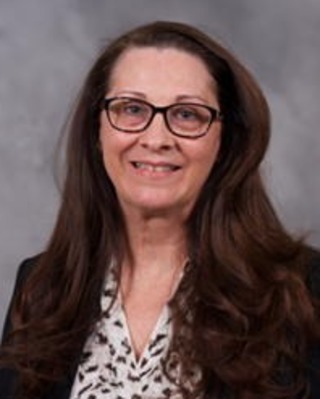
Hosted by Carol Love
Marriage & Family Therapist, LMFT
Verified Verified
Group meets in Saint Louis, MO 63117
I specialize in working with families who have had, or are going through a divorce or parental separation. Chronic conflict will have a lasting negative effect on you and your children BUT if you are able to manage your emotions and parent successfully, you and your children can thrive in the future. It is important to develop a good coparenting relationship and make sure your children have the support they need to deal with divorce/separation issues. In order to facilitate a positive outcome for families, I provide Coparent Counseling, Family Therapy, Reunification Therapy Group and Individual Therapy (adult and child).
This group is designed specifically with the needs of those transitioning from adolescence to adulthood, ages 17-26, in mind. We recognize that the combination of emotional sensitivity, social vulnerability and changes in performance expectations can lead to intensified anxiety and depression. We want to provide techniques for navigating this phase of life successfully. Participants in this group may be struggling with some of the following: Experiencing roller coaster relationships; Difficulty in balancing coursework and social life; Overwhelming emotions followed by numbing out; Thoughts of suicide; Desire to drop out of school or work; Self-harming or emotionally-impulsive behaviors
Many of the people who work with us are trying to find ways of controlling the emotions swirling around them, but it just feels like trying to grasp at sand in a sandstorm - the particles smacking them in the face, blurring their vision of the world, and causing them to flail about in futile attempts to stop the storm. Emotions similarly can cloud judgment and lead us to lash out in futile attempts to stop the pain. The more we try to control the whipping winds, the more energy we waste. We believe the key to surviving the storm is to accept its existence and skillfully cope with it.
A group for those who want to learn more about themselves, and their relationships. Attendees will explore how they think and why they react the way they do. We will address and discuss stereotypes of Black women and how they may impact who you are. The Renewal group is a safe and confidential place to learn more information to help you live with less stress and better health. We welcome you to the Renewal group
Hosted by Gladys Smith
Licensed Professional Counselor, PsyD, LPC, NCC, MAC, CCMHC
Verified Verified
Group meets in Clayton, MO 63105
I have extensive training in trauma, addiction, depression and anxiety, as well as stress and adjustment. I address the whole person in treatment planning. Individuals that work with me are empowered and encourages to meet their selected goal to achieve balance in their lives. We work together to form goals and I help you navigate the journey to wellness. We will use the body as a resource, as well as art, movement and poetry if a person chooses.This is a veteran owned business. I served 27 years in the United States Navy as a Hospital Corpsman (Medic), I work with first Responders and thrir families, veterans and MST.
**FREE**This is a support group for people on a journey of healing from losses in their lives. This group focuses on healing together. It is a place to connect with others who are also on a healing journey from loss. It is a community of encouragement. We will meet the first Tuesday of each month in 2023. Come early and stay late for more community. There is no cost for this group.
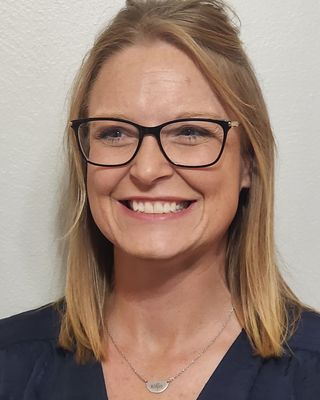
Hosted by Midwest Trauma Recovery Center
Licensed Professional Counselor, MA, LPC
Verified Verified
Group meets in Brentwood, MO 63144
Are you struggling because of something that happened in the recent or distant past? Have you experienced something traumatic like abuse, combat, physical violence, rape or robbery? Do you view the world negatively? Have you re-experienced the past or feel like 'it's happening all over again"? Do you avoid things you used to do for fear of being reminded of the past? Do you hate when people bring it up? You may be struggling with trauma triggers.
Group are available at request
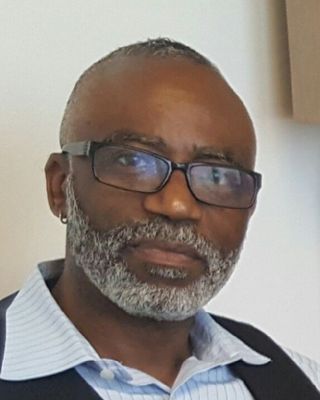
Hosted by Edward Donald Flynn
Licensed Professional Counselor, ABS, MA, LPC, NBCCH, DBTC
Verified Verified
Group meets in Clayton, MO 63105
I am a nationally certified DBT therapist. Dialectical Behavior Therapy is my orientation and specialty. My orientation and personal experiences have inspired me to work toward the treatment of clients struggling with childhood trauma, PTSD, anxiousness, distress tolerance, emotion regulation, relationship issues, LGBTQ concerns, NSSI(Self-Injury) and Borderline Personality Disorder.
In this class, you are the expert. You know your limits. You make the choice. I provide easy-to-follow guidance on different poses and breathing techniques for all bodies and abilities. Classes are focused on four key themes: practice making choices, present moment experience, taking effective action, and creating rhythms. There are no hands-on assists, no strenuous sequences to follow, and no distracting music and props. Learning to be with yourself in a safe way is the primary purpose, not getting a hot bod or looking good in front of others.
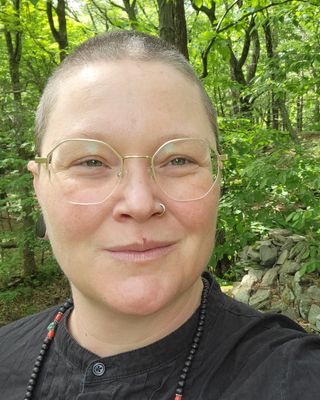
Hosted by Sunyata Kopriva
Clinical Social Work/Therapist, RYT, MSW, LCSW
Verified Verified
Group meets in Richmond Heights, MO 63117
*ACCEPTING CALIFORNIA, ILLINOIS, AND MISSOURI CLIENTS* Come be seen & be known in a relational space with me, so that you can finally arrive home in yourself. Are you curious if you have experienced trauma, or if trauma may still be affecting you? Have you worked with many healers & still feel stuck in certain places? Have you experienced a spiritual awakening & need to integrate the experience(s)? If you answered 'yes' to any of these questions, then you may be in the right place. Trauma can express itself as PTSD and Complex PTSD, various types of depression and anxiety, & many other symptoms. Lets get to the root.
Family Education/Support Group offered in a 4-week rotation. 90 minute group, dates and times vary. Please contact us for more information on the next session. The S.A.F.E. ALTERNATIVES model is utilized.
Hosted by Michelle Marie Seliner
Clinical Social Work/Therapist, MSW, LCSW
Verified Verified
Group meets in Saint Louis, MO 63117
My practice provides treatment and resources for adolescents and adults who are struggling with mood, anxiety, and trauma-related disorders while engaging in self-injury (cutting, burning, scratching, picking and trichotillomania), disordered eating, sexual promiscuity, substance abuse and other risky, impulsive behaviors. In addition we have programs available for families looking to support a loved one struggling with self-destructive behavior. We offer individual, family and group psychotherapy and, family/friends educational classes.
Group Psychotherapy Program for adolescents (12 and up) who are struggling with self-injury or who are in recovery. Designed to be an adjunct to individual therapy. 2 groups offered on Wednesday evenings (4:30-6pm and 6:15-7:45pm). The S.A.F.E. ALTERNATIVES model is utilized.
Hosted by Michelle Marie Seliner
Clinical Social Work/Therapist, MSW, LCSW
Verified Verified
Group meets in Saint Louis, MO 63117
My practice provides treatment and resources for adolescents and adults who are struggling with mood, anxiety, and trauma-related disorders while engaging in self-injury (cutting, burning, scratching, picking and trichotillomania), disordered eating, sexual promiscuity, substance abuse and other risky, impulsive behaviors. In addition we have programs available for families looking to support a loved one struggling with self-destructive behavior. We offer individual, family and group psychotherapy and, family/friends educational classes.
See more therapy options for 63124


FAQs - About Group Therapy and Support Groups
How can I find a support group in 63124?
Search for nearby support groups by inputting your city, zip code, or the name of the group into the search bar. From there, you can filter to find a group that suits your needs, whether you are looking for support for a teenager, a group that focuses on a specific issue, such as depression, or a particular program type, such as one geared toward developing social skills. To navigate between locations within the same country, enter a new city or zip code into the search bar.
How does group therapy work?
Therapy groups are led by one or more therapists and serve to help people process their experiences and learn from others who understand their challenges firsthand. They can be based on a specific issue, such as addiction, grief, physical illnesses, parenting, and caregiving. They can involve a specific type of program or therapy, such as a social skills group or CBT group. They can also be specific to a particular population or community, such as teens or LGBTQ.
Support groups, like Alcoholics Anonymous, also focus on a specific issue, but are typically led by members with lived experiences and are less structured than therapy groups. Most therapy groups will meet for a fixed length of time with a consistent group of members, while many support groups meet for an indefinite period of time with members coming and going.
Support groups, like Alcoholics Anonymous, also focus on a specific issue, but are typically led by members with lived experiences and are less structured than therapy groups. Most therapy groups will meet for a fixed length of time with a consistent group of members, while many support groups meet for an indefinite period of time with members coming and going.
What are the benefits of group therapy?
Support groups help connect people with shared challenges or physical and mental health conditions. In a group setting, participants can receive support and feedback from peers and can acquire new skills, strategies and perspectives by listening to one another. Discussing your experience with someone who also has a cancer diagnosis, or whose son also struggles with addiction, for example, can help you feel less alone, reduce distress, find empathy and connection, and learn practical or medical information that has helped others. Group therapy can also be a more affordable option than individual therapy and just as effective.
Is group therapy as effective as individual therapy?
Support groups can be deeply valuable for both emotional support and/or treatment outcomes. It’s difficult to make a blanket statement on efficacy due to the many different types of support groups and conditions treated, but group therapy has been found to be just as effective as individual therapy in establishing long-term abstinence for conditions such as substance abuse, addiction and alcohol abuse.
How much does group therapy cost?
Group counseling is typically less expensive than individual counseling, with each session costing on average between $60 to $75. Meanwhile, individual therapy sessions can run anywhere from $100 to $200 and up, even after insurance. It is possible to find low-cost group therapy options and many therapists offer group sessions free of charge.
Does insurance cover group therapy?
As with individual therapy, many insurance companies do offer coverage for group therapy sessions. However, the coverage varies based on your insurance plan details and whether you choose an in-network or out-of-network mental healthcare provider. Individuals are encouraged to check with their insurance providers to verify coverage.
How long does group therapy last?
The length of a support group session is often one hour but can fall anywhere between 45 minutes and two hours. The amount of time that people remain in a support group varies based on their specific needs and goals and the type of therapy. Some individuals may seek a shorter-term group, such as a bereavement group, that may last between six and 20 weeks. Some may seek a longer-term group that lasts for a year or indefinitely.
What are the limitations of support groups?
Support groups have many benefits, but there are a few limitations as well. Support groups do not constitute formal therapeutic or medical treatment, and are not run by licensed mental health professionals, so some people may opt for group therapy or individual therapy instead. Additionally, support groups can depend on the other participants, so a disruptive individual has the potential to mar the group dynamic, and the anecdotal information shared may sometimes be unhelpful or inaccurate. Because it is a group setting, confidentiality can be more difficult to guard and participants receive less personalized attention than they would in an individual therapy session.