Support Groups in 02445
A major element of my CBT group is reducing the patterns of avoidance that come to control a person's life. Many people with panic and anxiety disorders experience tremendous discomfort in situations they cannot "get out of" including social gatherings, classrooms, and subway cars. The avoidance of these situations can interfere with the development of academic, professional, and personal goals, and contribute to other mental health issues, including isolation and depression. CBT has been demonstrated in clinical studies to significantly reduce these avoidance-based behaviors and return people to their normal lives and routines. Please contact me to join.

Hosted by Jonathan E. Goldberg
Psychologist, PhD
Verified Verified
Group meets in Brookline, MA 02445
NOW Accepting New Clients: There is no way to adequately describe the experience of living with depression and anxiety. For the roughly 14% of Americans who suffer from these conditions, everyday activities, such as going to work, speaking in class, even meeting friends for dinner, can become agonizing challenges accompanied by a host of negative physical and emotional symptoms. Perhaps you've noticed your face burning when you speak in public; have felt like an impostor at work and wait to be "found out," or maybe you've experienced a surge of panic (racing-heart, trouble breathing, dizziness, nausea) when you least expected it?
In this group, we will explore all kinds of Relationships in the group members’ lives, including Family, Business, Romantic, Friendships, and others. We will use examples of how people relate in the group to improve the client's relationships outside the group. Groups are available at 2 locations, in Belmont and Brookline.

Hosted by Felix William Treitler
Clinical Social Work/Therapist, LICSW, USTA, USPTA
Verified Verified
Group meets in Brookline, MA 02445
I offer a co-ed Relationship Group. Feel free to inquire more about how this kind of therapy can be quite useful. I do Individual, Couples, Family, and Group Therapy. I currently facilitate a Bereavement Group which meets at my Brookline office every Saturday from 2-4pm. I also run groups for substance abuse, depression and anxiety. In addition, I have a lot of experience counseling children of all ages. I am a firm believer in strength-based psychotherapy.
BPAR offers several adult adoptee groups and workshops, including a general adult adoptee group, a group for adoptees of color, a healthy relationships group for adoptees, and a writing workshop. The cost of the groups are $30-$35 per person. Please note an initial phone screen is required for all new group members.

Hosted by Boston Post Adoption Resources
Clinical Social Work/Therapist, LICSW
Verified Verified
Group meets in Brookline, MA 02445
Boston Post Adoption Resources, also known as BPAR, is a nonprofit organization that was founded to support all individuals and families who are touched by adoption. We understand the challenges and impact that adoption can have on relationships, family dynamics, and identity. Our team of licensed mental health professionals is specifically trained to deal with post adoption challenges with clients of all ages in individual, family and group settings. We recognize that every situation is different, and our goal is to provide support to you and your family on your lifelong journey through adoption.
Co-led adult interpersonal group on Tuesday evenings in Brookline. For people hoping to develop a deeper understanding of themselves and others and work through struggles with the support of the leaders as well as other group members. Open to people who want additional support in conjunction with their individual therapy or people who have previous experience in individual therapy and think the group modality would benefit them at this time.
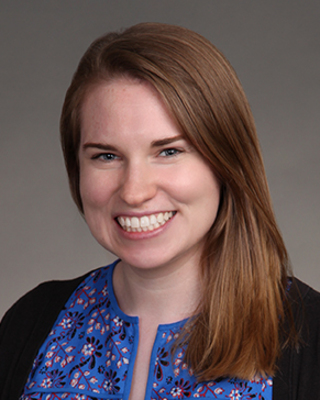
Hosted by Amanda Neas
Clinical Social Work/Therapist, LICSW
Verified Verified
Group meets in Brookline, MA 02445
I believe people sometimes underestimate the power of talking. Having someone listen with an attentive and empathetic ear can be a deeply valuable experience. I practice with the philosophy of working to fully understand and appreciate each and every client I work with. My goal is to create a safe and comfortable space where you can say anything.
BPAR offers several adoptee groups for children, including a group for kids ages 8-10, a group for tweens ages 11-12, a group for young teens, ages 13-15, and a group for older teens, ages 16-18. Cost for group is $30 per person per session. Please note an initial phone screen is required for all new group members.
Hosted by Boston Post Adoption Resources
Clinical Social Work/Therapist, LICSW
Verified Verified
Group meets in Brookline, MA 02445
Boston Post Adoption Resources, also known as BPAR, is a nonprofit organization that was founded to support all individuals and families who are touched by adoption. We understand the challenges and impact that adoption can have on relationships, family dynamics, and identity. Our team of licensed mental health professionals is specifically trained to deal with post adoption challenges with clients of all ages in individual, family and group settings. We recognize that every situation is different, and our goal is to provide support to you and your family on your lifelong journey through adoption.
BPAR offers several parent support groups for parents of adoptees. This includes a parent group for parents of adoptees ages 4 - 7; a parent group for parents of children ages 8-10; a parent group for tweens ages 11-12; a parent group for teens ages 13-18; and a parent group for parents who have adopted transracially.
Hosted by Boston Post Adoption Resources
Clinical Social Work/Therapist, LICSW
Verified Verified
Group meets in Brookline, MA 02445
Boston Post Adoption Resources, also known as BPAR, is a nonprofit organization that was founded to support all individuals and families who are touched by adoption. We understand the challenges and impact that adoption can have on relationships, family dynamics, and identity. Our team of licensed mental health professionals is specifically trained to deal with post adoption challenges with clients of all ages in individual, family and group settings. We recognize that every situation is different, and our goal is to provide support to you and your family on your lifelong journey through adoption.
This group is ongoing and is meeting at my Brookline office. Working in an empathic, non-judgemental, confidential atmosphere, we will discuss issues involved in the grieving process. I will try to organize the themes around the death of a loved one, family member or friend. These groups tend to be more helpful with regular attendance, but there will be some flexibility for people leaving and joining. I encourage you to call me to find out more and ask any questions you may have. 339-999-7250.
Hosted by Felix William Treitler
Clinical Social Work/Therapist, LICSW, USTA, USPTA
Verified Verified
Group meets in Brookline, MA 02445
I offer a co-ed Relationship Group. Feel free to inquire more about how this kind of therapy can be quite useful. I do Individual, Couples, Family, and Group Therapy. I currently facilitate a Bereavement Group which meets at my Brookline office every Saturday from 2-4pm. I also run groups for substance abuse, depression and anxiety. In addition, I have a lot of experience counseling children of all ages. I am a firm believer in strength-based psychotherapy.
Care for yourself as you care for your kids! (ages 5 - 10. IF your kids are older, we offer 1-to-1 counseling and coaching.) Join us for this supportive & educational “parent retreat.” Learn to “lead the way for your kids,” modeling and teaching ways to stay cool, calm, and connected. Offered conveniently over Zoom, “The Parent Class” is a 6-session, skills-based program: a powerful and patented mix of skills, pulling together the best of DBT, CBT, and Collaborative Problem-Solving. Email to register. Taught by veteran "parent coach," Elizabeth, Quigley, LICSW, help is on the way!

Hosted by Elizabeth Quigley, LICSW, New Inspiration
Clinical Social Work/Therapist, LICSW
Verified Verified
Group meets in Brookline, MA 02445
You want to feel better and do better in your life, and now––perhaps more than ever––you need someone - someone REALLY helpful - “in your corner” to help you turn things around. I’m willing and able to do just that. Together, we can do this: I use a range of solution-focused approaches: treatments that work (CBT, DBT, and whatever else works). We’ll figure out exactly how you’ve “gotten here,” plan a way out, and I’ll guide you along the way…as we activate your strengths and your inner resources to live a better life. I work with adults, teens, and families and I’m available immediately to give you the help you need and deserve. It
Care for yourself as you care for your kids! (ages 5 - 10. IF your kids are older, we offer 1-to-1 counseling and coaching.) Join us for this supportive & educational “parent retreat.” Learn to “lead the way for your kids,” modeling and teaching ways to stay cool, calm, and connected. Offered conveniently over Zoom, “The Parent Class” is a 6-session, skills-based program: a powerful and patented mix of skills, pulling together the best of DBT, CBT, and Collaborative Problem-Solving. Email to register. Taught by veteran "parent coach," Elizabeth, Quigley, LICSW, help is on the way!

Hosted by Anxiety Specialist, Amanda Urato, LMHC
Counselor, LMHC
Verified Verified
Group meets in Brookline, MA 02445
You may be feeling overwhelmed by stress and anxiety - whether it’s from external demands or internal struggles. Maybe it's social anxiety, "a life transition," or healing from trauma. Or maybe it's something more general, like you want to feel more "in control" of your emotions…and your life. I can help. Together, we’ll uncover the roots of your challenges, empowering you to move forward - with skill and confidence. I use “treatments that work” (CBT, DBT, mindfulness, etc). But we’ll find what works for YOU. Lastly, I don’t just want you to just “feel better.” I want you to live your best life. I'm looking forward to meeting you!
Call/email for telehealth therapy individual or group. Mental health groups focus on small, specialized groups meetings online (about 5-10 persons) to discuss different mental health issues such as work stress, relationship issues, anxiety, relaxation and meditation, parenting, adaptation to chronic diseases, high school fresh year experience, preparation for collage by high school seniors. Each group facilitated by expert facilitator in group dynamic and mental health field and all facilitators supervised by expert psychologists. Each group meet weekly for 60 mints. Fee is 79/ month for unlimited meetings.

We provide a holistic mental health coaching/counseling committed to personal, social and professional growth. Our professionals are expert professors, PhD, MA, BS in the field of health and counseling, and serving clients of all ages, and organizations for more than 20yrs.The center provides: 1- life coaching to women for varied health concerns: Nutritional counseling/ concerns for women, children, students, chronic diseases; Adaptation to pregnancy; Postpartum; menopause; Dealing with aging process; health concerns, and chronic diseases, parenting issues, adolescence challenges, body image, and skin problems and concerns.

Hosted by New Inspiration Counseling
Clinical Social Work/Therapist, LICSW, EdS, MSW, BA
Verified Verified
Group meets in Brookline, MA 02445
See more therapy options for 02445


FAQs - About Group Therapy and Support Groups
How can I find a support group in 02445?
Search for nearby support groups by inputting your city, zip code, or the name of the group into the search bar. From there, you can filter to find a group that suits your needs, whether you are looking for support for a teenager, a group that focuses on a specific issue, such as depression, or a particular program type, such as one geared toward developing social skills. To navigate between locations within the same country, enter a new city or zip code into the search bar.
How does group therapy work?
Therapy groups are led by one or more therapists and serve to help people process their experiences and learn from others who understand their challenges firsthand. They can be based on a specific issue, such as addiction, grief, physical illnesses, parenting, and caregiving. They can involve a specific type of program or therapy, such as a social skills group or CBT group. They can also be specific to a particular population or community, such as teens or LGBTQ.
Support groups, like Alcoholics Anonymous, also focus on a specific issue, but are typically led by members with lived experiences and are less structured than therapy groups. Most therapy groups will meet for a fixed length of time with a consistent group of members, while many support groups meet for an indefinite period of time with members coming and going.
Support groups, like Alcoholics Anonymous, also focus on a specific issue, but are typically led by members with lived experiences and are less structured than therapy groups. Most therapy groups will meet for a fixed length of time with a consistent group of members, while many support groups meet for an indefinite period of time with members coming and going.
What are the benefits of group therapy?
Support groups help connect people with shared challenges or physical and mental health conditions. In a group setting, participants can receive support and feedback from peers and can acquire new skills, strategies and perspectives by listening to one another. Discussing your experience with someone who also has a cancer diagnosis, or whose son also struggles with addiction, for example, can help you feel less alone, reduce distress, find empathy and connection, and learn practical or medical information that has helped others. Group therapy can also be a more affordable option than individual therapy and just as effective.
Is group therapy as effective as individual therapy?
Support groups can be deeply valuable for both emotional support and/or treatment outcomes. It’s difficult to make a blanket statement on efficacy due to the many different types of support groups and conditions treated, but group therapy has been found to be just as effective as individual therapy in establishing long-term abstinence for conditions such as substance abuse, addiction and alcohol abuse.
How much does group therapy cost?
Group counseling is typically less expensive than individual counseling, with each session costing on average between $60 to $75. Meanwhile, individual therapy sessions can run anywhere from $100 to $200 and up, even after insurance. It is possible to find low-cost group therapy options and many therapists offer group sessions free of charge.
Does insurance cover group therapy?
As with individual therapy, many insurance companies do offer coverage for group therapy sessions. However, the coverage varies based on your insurance plan details and whether you choose an in-network or out-of-network mental healthcare provider. Individuals are encouraged to check with their insurance providers to verify coverage.
How long does group therapy last?
The length of a support group session is often one hour but can fall anywhere between 45 minutes and two hours. The amount of time that people remain in a support group varies based on their specific needs and goals and the type of therapy. Some individuals may seek a shorter-term group, such as a bereavement group, that may last between six and 20 weeks. Some may seek a longer-term group that lasts for a year or indefinitely.
What are the limitations of support groups?
Support groups have many benefits, but there are a few limitations as well. Support groups do not constitute formal therapeutic or medical treatment, and are not run by licensed mental health professionals, so some people may opt for group therapy or individual therapy instead. Additionally, support groups can depend on the other participants, so a disruptive individual has the potential to mar the group dynamic, and the anecdotal information shared may sometimes be unhelpful or inaccurate. Because it is a group setting, confidentiality can be more difficult to guard and participants receive less personalized attention than they would in an individual therapy session.