Support Groups in Lorain, OH
Explore, discuss and identify the mental aspects of addiction that lead to relapse. Explore and develop creative techniques that will assist in relapse prevention, maintain sobriety and recovery. Explore and process the effects of the brain and addiction.

Explore, discuss and identify the mental aspects of addiction that lead to relapse. Explore and develop creative techniques that will assist in relapse prevention, maintain sobriety and recovery. Explore and process the effects of the brain and addiction.
A support group for women that have been in domestic abuse of any kind, women who need support while dealing with life on life terms. This group centers the women and encourages change that will help them be unbreakable, unshakable and unmovable. We meet every 2nd and 4th Thursday of the month from 6PM to 7PM at 1901 N Ridge Road, Lorain. All are welcome. Come expecting to be changed, heard and unbreakable. For more information contact: 330-577-ULIV.
A support group for women that have been in domestic abuse of any kind, women who need support while dealing with life on life terms. This group centers the women and encourages change that will help them be unbreakable, unshakable and unmovable. We meet every 2nd and 4th Thursday of the month from 6PM to 7PM at 1901 N Ridge Road, Lorain. All are welcome. Come expecting to be changed, heard and unbreakable. For more information contact: 330-577-ULIV.
More Groups Nearby
Next circle begins: 10/06/2025. Join the sacredness of healing with others in a group using IFS Healing Circles. Circles start at the beginning of each season. Discover the power of healing in community with one another.

Next circle begins: 10/06/2025. Join the sacredness of healing with others in a group using IFS Healing Circles. Circles start at the beginning of each season. Discover the power of healing in community with one another.
A supportive, judgment-free space where a small group of women can learn and grow and work on healthy skills. This group is designed to help you build practical tools to manage stress, anxiety, life transitions, and everyday challenges. Through guided discussions, evidence-based strategies, you'll gain strength and resilience Whether you're navigating a tough season or simply want to grow in emotional wellness. You do not need to be an individual client to join. This is not a replacement for counseling but a group to enhance and learn new skills. Please email me at tarayunglpc@gmail.com for more information
Hosted by Tara Yung
Licensed Professional Counselor, MA, LPC
Group meets in Middleburg Heights, OH 44130
A supportive, judgment-free space where a small group of women can learn and grow and work on healthy skills. This group is designed to help you build practical tools to manage stress, anxiety, life transitions, and everyday challenges. Through guided discussions, evidence-based strategies, you'll gain strength and resilience Whether you're navigating a tough season or simply want to grow in emotional wellness. You do not need to be an individual client to join. This is not a replacement for counseling but a group to enhance and learn new skills. Please email me at tarayunglpc@gmail.com for more information
We are a group of counselors/family therapists who provide counseling to a diverse set of clients with a variety of concerns. Types of counseling utilized include: affirmative, child/adolescent, cognitive, couples, EMDR, exercise, existential, family systems, feminist, narrative, parent/child relationship, play, wellness, and many more. We have offices in Ohio City, Lakewood, Sheffield/Elyria, and Middleburg Heights.

We are a group of counselors/family therapists who provide counseling to a diverse set of clients with a variety of concerns. Types of counseling utilized include: affirmative, child/adolescent, cognitive, couples, EMDR, exercise, existential, family systems, feminist, narrative, parent/child relationship, play, wellness, and many more. We have offices in Ohio City, Lakewood, Sheffield/Elyria, and Middleburg Heights.
Our program is designed specifically for, by, and about the needs of African Americans with mental health issues. Consumers learn skills to manage life stress, challenges, and mental health problems when navigating America’s dominant culture. Our platform is DBT (Dialectical Behavior Therapy) Based and uses multimedia learning platforms. In-person groups include the use of hypnotherapy for a deeper level of healing. This program is designed for African Americans dealing with: Codependency Bipolar Disorder Schizoaffective Disorder Borderline Personality Disorder Anxiety Depression Stress Self Mutilation Trauma Participants will develop Core Skills in the following areas: Distress Tolerance Mindfulness Emotion Regulation Interpersonal Effectiveness Self-regulation skills.

Hosted by Sabrina Smith-Walker
Drug & Alcohol Counselor, MA-B, MSSA, CHT, CDCA, SWA
Group meets in Maple Heights, OH 44137
Our program is designed specifically for, by, and about the needs of African Americans with mental health issues. Consumers learn skills to manage life stress, challenges, and mental health problems when navigating America’s dominant culture. Our platform is DBT (Dialectical Behavior Therapy) Based and uses multimedia learning platforms. In-person groups include the use of hypnotherapy for a deeper level of healing. This program is designed for African Americans dealing with: Codependency Bipolar Disorder Schizoaffective Disorder Borderline Personality Disorder Anxiety Depression Stress Self Mutilation Trauma Participants will develop Core Skills in the following areas: Distress Tolerance Mindfulness Emotion Regulation Interpersonal Effectiveness Self-regulation skills.
This is a secular grieving space for people that understand what you're moving through after profound loss. This is meant to be a collective space for sharing about who and what you’ve lost, and discovering yourself now in this new place in your life. Participants can expect to engage in peer support, creative expression, and facilitated discussion on topics relevant to attendees. This closed group will be a space where participants can listen, express, and explore what can be as you move in your grief with others who understand.

Hosted by Kimberly Koljat
Marriage & Family Therapist, MA, LMFT, IMFT-S, RPT-S, RDT
Group meets in Cleveland, OH 44113
This is a secular grieving space for people that understand what you're moving through after profound loss. This is meant to be a collective space for sharing about who and what you’ve lost, and discovering yourself now in this new place in your life. Participants can expect to engage in peer support, creative expression, and facilitated discussion on topics relevant to attendees. This closed group will be a space where participants can listen, express, and explore what can be as you move in your grief with others who understand.
Virtual, weekly 90 minute, 8 session course for parents and caregivers of tweens and teens. Parents and caregivers who benefit from this course may be caring for tweens and teens with anxiety, ADHD, ASD, depression, behavior issues, self harm and suicidality and/or substance use. Guided by DBT and other evidence-based practices, this course helps increase positive interactions with your child, reduce conflict, and problem-solve together. This is not a replacement for full model, multifamily DBT skills training. Co-facilitated with Elizabeth Bailey-Grincius, LPC (VA), ATR-BC, LPCC (OH), LPAT (OH). Serving all of Ohio and Virginia.

Virtual, weekly 90 minute, 8 session course for parents and caregivers of tweens and teens. Parents and caregivers who benefit from this course may be caring for tweens and teens with anxiety, ADHD, ASD, depression, behavior issues, self harm and suicidality and/or substance use. Guided by DBT and other evidence-based practices, this course helps increase positive interactions with your child, reduce conflict, and problem-solve together. This is not a replacement for full model, multifamily DBT skills training. Co-facilitated with Elizabeth Bailey-Grincius, LPC (VA), ATR-BC, LPCC (OH), LPAT (OH). Serving all of Ohio and Virginia.
This group is designed to empower those that have survived various kinds of trauma. This group will provide education about the challenges of being a survivor. Anyone apart of this group will increase their understanding that they are NOT crazy or alone in their experiences. The goal of this group will be to decrease trauma related symptoms.

This group is designed to empower those that have survived various kinds of trauma. This group will provide education about the challenges of being a survivor. Anyone apart of this group will increase their understanding that they are NOT crazy or alone in their experiences. The goal of this group will be to decrease trauma related symptoms.
Intuitive Art & Movement Group: a Trauma-focused Art and Movement based group for Somatic Healing and Community Connection. Goals will include mindfulness, building authenticity, presence and increasing tolerance for connecting to the self through the body.
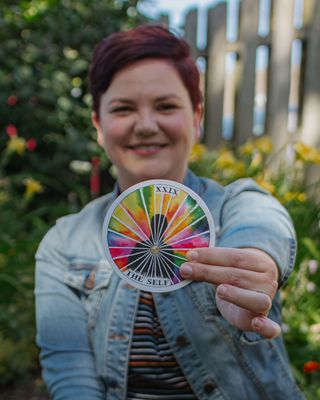
Intuitive Art & Movement Group: a Trauma-focused Art and Movement based group for Somatic Healing and Community Connection. Goals will include mindfulness, building authenticity, presence and increasing tolerance for connecting to the self through the body.
We are a group of counselors/family therapists who provide counseling to a diverse set of clients with a variety of concerns. Types of counseling utilized include: affirmative, child/adolescent, cognitive, couples, EMDR, exercise, existential, family systems, feminist, narrative, parent/child relationship, play, wellness, and many more.

Hosted by Jacob Irey
Licensed Professional Clinical Counselor, MEd, LPCC
Group meets in Cleveland, OH 44113
We are a group of counselors/family therapists who provide counseling to a diverse set of clients with a variety of concerns. Types of counseling utilized include: affirmative, child/adolescent, cognitive, couples, EMDR, exercise, existential, family systems, feminist, narrative, parent/child relationship, play, wellness, and many more.
Various types of music therapy groups & individual sessions are offered, including those tailored for office group cohesion, grief processing, gross and fine motor skill development, and emotion identification and processing. Facilitated by Neurologic Music Therapist, Madelyn Hasebein, NMT.

Various types of music therapy groups & individual sessions are offered, including those tailored for office group cohesion, grief processing, gross and fine motor skill development, and emotion identification and processing. Facilitated by Neurologic Music Therapist, Madelyn Hasebein, NMT.
Affiliated with the Sondermind National Healthcare Provider system

Hosted by Ginny Harvey
Clinical Social Work/Therapist, LISW
Group meets in North Ridgeville, OH 44039
Affiliated with the Sondermind National Healthcare Provider system
8-Session Anger Management Group Outline: Introduction & Goals of the program 1. Definition: What is anger? 2. Exploring: Anger, hostility, bitterness and aggression 3. Impact of Anger: The effects anger has on the body, behavior and thinking 4. What are the triggers of anger? 5. Understanding your anger triggers 6. What factors negatively impact your anger? 7. Cost Analysis: Benefits & Costs getting anger 7b. Emotional Brain v. Thinking Brain 8. Control: Name it Tame it Claim it Method & Certificate

Hosted by Able Counseling & Associates, Inc.
Counselor, LPCC, NCC, PhD(c)
Group meets in Cleveland, OH 44121
8-Session Anger Management Group Outline: Introduction & Goals of the program 1. Definition: What is anger? 2. Exploring: Anger, hostility, bitterness and aggression 3. Impact of Anger: The effects anger has on the body, behavior and thinking 4. What are the triggers of anger? 5. Understanding your anger triggers 6. What factors negatively impact your anger? 7. Cost Analysis: Benefits & Costs getting anger 7b. Emotional Brain v. Thinking Brain 8. Control: Name it Tame it Claim it Method & Certificate
At Safe Mind Counseling, our trauma-informed, culturally sensitive clinicians truly understand the weight of lived experiences, identity, and unspoken pain. We know life doesn’t pause for healing. That’s why we offer after-work evening appointments and weekend sessions, so therapy can fit into real life—not add more stress. We also accept most insurance plans, because getting support shouldn’t feel out of reach. If you’ve been carrying too much, this is a place where you don’t have to anymore. You deserve care that understands you. Reaching out can be the first step toward feeling supported, seen, and less alone.

At Safe Mind Counseling, our trauma-informed, culturally sensitive clinicians truly understand the weight of lived experiences, identity, and unspoken pain. We know life doesn’t pause for healing. That’s why we offer after-work evening appointments and weekend sessions, so therapy can fit into real life—not add more stress. We also accept most insurance plans, because getting support shouldn’t feel out of reach. If you’ve been carrying too much, this is a place where you don’t have to anymore. You deserve care that understands you. Reaching out can be the first step toward feeling supported, seen, and less alone.
In 9 hours a week, we teach skills to increase your chance of attaining lasting recovery from compulsive use of drugs or alcohol. We help you develop weekly goals and reward you for meeting them. We assist managing internal cravings that are neurobiological in nature. We invite you see yourself honestly and love yourself for who you are, strengths and flaws included. We help you work through traumatic experiences that may block your recovery. Medication-assistance is available. We treat emotional disturbances that often accompany such use. We provide family information groups, and couples and family therapy as needed.

In 9 hours a week, we teach skills to increase your chance of attaining lasting recovery from compulsive use of drugs or alcohol. We help you develop weekly goals and reward you for meeting them. We assist managing internal cravings that are neurobiological in nature. We invite you see yourself honestly and love yourself for who you are, strengths and flaws included. We help you work through traumatic experiences that may block your recovery. Medication-assistance is available. We treat emotional disturbances that often accompany such use. We provide family information groups, and couples and family therapy as needed.
A customized small-group ketamine-assisted experience for medically approved individuals utilizing prescribed ketamine treatment formats such as troches or rapid dissolve tablets (RDTs). Cohorts are intentionally limited to 3–5 participants maximum and may include individuals, couples, or selected peer groups. Prior intake, preparation, assessment, and medical clearance are required for all participants. Experiences are guided, facilitated, and clinically overseen within calming environments supportive of emotional safety, psycholytic exploration, nervous system regulation, and integration. Retreats may include guided dosing support, integration processing, movement, tea rituals, somatic practices, art interventions, mindfulness, or breathwork depending on individualized treatment planning.
Hosted by Lisa Hollo
Licensed Professional Clinical Counselor, MA, ATR, LPCCS
Group meets in Cleveland, OH 44107
A customized small-group ketamine-assisted experience for medically approved individuals utilizing prescribed ketamine treatment formats such as troches or rapid dissolve tablets (RDTs). Cohorts are intentionally limited to 3–5 participants maximum and may include individuals, couples, or selected peer groups. Prior intake, preparation, assessment, and medical clearance are required for all participants. Experiences are guided, facilitated, and clinically overseen within calming environments supportive of emotional safety, psycholytic exploration, nervous system regulation, and integration. Retreats may include guided dosing support, integration processing, movement, tea rituals, somatic practices, art interventions, mindfulness, or breathwork depending on individualized treatment planning.
90-minute group, offered virtually on Tuesdays 4:30-6:00 pm EST, hybrid Wednesdays 1-2:30 pm, and hybrid Thursdays 4:30-6:00 pm. Led by an expert skills trainer, and designed to be more like a class than a process group, we review the 4 skills modules: Mindfulness, Distress Tolerance, Emotion Regulation, and Interpersonal Effectiveness. The group consists of a mindfulness practice, homework review, and teaching/learning the new skill(s) for the week. Open to LWDBT clients and to others seeing community therapists!

90-minute group, offered virtually on Tuesdays 4:30-6:00 pm EST, hybrid Wednesdays 1-2:30 pm, and hybrid Thursdays 4:30-6:00 pm. Led by an expert skills trainer, and designed to be more like a class than a process group, we review the 4 skills modules: Mindfulness, Distress Tolerance, Emotion Regulation, and Interpersonal Effectiveness. The group consists of a mindfulness practice, homework review, and teaching/learning the new skill(s) for the week. Open to LWDBT clients and to others seeing community therapists!
First session of the year begins in January. This group meets weekly for one hour until the group has completed each of the modules. This group is a great supplement to therapy, an affordable option for personal development or a refresher for those already familiar with DBT. Learn to manage crises, balance overwhelming emotions, discover the power of mindfulness in every day life and improve relationships with the magic of validation.

Hosted by Allyson Heyman Engelhart
Licensed Professional Clinical Counselor, LPCC-S
Group meets in Huron, OH 44839
First session of the year begins in January. This group meets weekly for one hour until the group has completed each of the modules. This group is a great supplement to therapy, an affordable option for personal development or a refresher for those already familiar with DBT. Learn to manage crises, balance overwhelming emotions, discover the power of mindfulness in every day life and improve relationships with the magic of validation.
Aharon Weinstein, an experienced clinical social worker in Central Ohio, offers specialized supervision to social workers at various career stages. With expertise in CBT, DBT, EMDR, trauma-informed care, crisis intervention, and evidence-based approaches, Aharon provides empathetic guidance. Their collaborative supervision style fosters a safe environment for professional growth, empowering social workers to enhance skills, navigate challenges, and achieve goals. Combining clinical acumen with a passion for supporting others, Aharon is committed to ongoing professional development, ensuring relevant supervision. Connect today for transformative supervision. Email: aharon@seasonscounselingservices.com

Hosted by Aharon Weinstein
Clinical Social Work/Therapist, LISW-S, LICDC
Group meets in Cleveland, OH 44122
Aharon Weinstein, an experienced clinical social worker in Central Ohio, offers specialized supervision to social workers at various career stages. With expertise in CBT, DBT, EMDR, trauma-informed care, crisis intervention, and evidence-based approaches, Aharon provides empathetic guidance. Their collaborative supervision style fosters a safe environment for professional growth, empowering social workers to enhance skills, navigate challenges, and achieve goals. Combining clinical acumen with a passion for supporting others, Aharon is committed to ongoing professional development, ensuring relevant supervision. Connect today for transformative supervision. Email: aharon@seasonscounselingservices.com
See more therapy options for Lorain


FAQs - About Group Therapy and Support Groups
How can I find a support group in Lorain?
To find a support group in your area, start by entering your city, zip code, or the name of the group into the search bar at the top of the page. When searching, consider whether you prefer an in-person or virtual group. This can help you decide how broad your geographic search should be. If you are open to virtual groups, you might want to search by state instead of just your city, especially if there are limited options nearby.
Once you complete your search, you can use the filters to narrow the results by selecting specialties (such as grief, trauma, or eating disorders), therapeutic approaches, age groups, and other criteria to find a group that best fits your needs.
How does group therapy work?
Group therapy is led by one or more trained therapists and provides a space where participants can process their experiences and learn from others facing similar challenges. Groups may focus on a specific issue—such as addiction, grief, physical illnesses, parenting, or caregiving—or they may center around a particular therapeutic approach, such as Cognitive Behavioral Therapy (CBT), social skill development, or Exposure Therapy. Some groups are also designed for specific populations, such as teens, veterans, or LGBTQ+ individuals.
It’s also important to distinguish group therapy from peer-led support groups, like Alcoholics Anonymous. While both can offer valuable support, therapy groups are typically led by licensed professionals and follow a more structured format. Therapy groups often meet for a fixed length of time with a consistent group of members, while many peer support groups meet for an indefinite period of time with members coming and going.
What are the benefits of group therapy?
Group therapy offers several important benefits. It brings together people facing similar challenges—whether related to mental health, physical health, or life transitions—and creates a supportive environment where participants can exchange feedback, share experiences, and learn from one another. Hearing different perspectives can help individuals discover new coping strategies and practical tools they may not have encountered on their own. Sharing personal experiences, such as coping with a serious illness or navigating family struggles, can also reduce feelings of isolation and foster a sense of connection and understanding. In addition to emotional support, group members often gain useful, real-world advice from peers who have faced similar situations.
Group therapy is typically more affordable than individual therapy and, for certain conditions, can be equally effective. Many groups also include structured activities—such as guided journaling, cognitive-behavioral exercises, or role-playing—to help participants develop concrete skills they can apply in daily life.
Is group therapy as effective as individual therapy?
It is difficult to make a blanket statement about the effectiveness of support groups, as they vary widely in focus and the conditions they address. However, support groups can be highly valuable in helping individuals gain emotional support and achieve meaningful treatment outcomes. For certain conditions, such as substance use, research has shown that group therapy can be particularly effective—sometimes just as effective as individual therapy—in supporting long-term recovery.
Many professionals attribute the effectiveness of group therapy to the unique benefits of the group setting, which fosters peer-to-peer learning and a sense of connection through shared experiences. Group settings also offer accountability and encouragement from both facilitators and fellow participants, which helps sustain motivation and supports continued progress. These factors together play a key role in promoting the overall effectiveness of group therapy.
How much does group therapy cost?
Group therapy is typically less expensive than individual therapy, with sessions typically costing between $50 and $75 each. In comparison, individual therapy can cost anywhere from $100 to $200 or more per session, even with insurance. Some therapists or organizations offer low-cost or free group therapy options, particularly through community centers or nonprofit organizations. In some cases, groups may require payment upfront for a set number of sessions, such as paying for six weekly sessions at the first meeting. However, many providers offer payment plans to help make participation more accessible if this upfront payment is required.
Does insurance cover group therapy?
As with individual therapy, insurance coverage for group therapy varies based on factors such as your specific insurance plan, the purpose of the group, your diagnosis, and whether the group provider is in-network. Many insurance plans cover group therapy sessions that address diagnosable mental health conditions, such as substance use disorders, anxiety, or depression.
However, groups that focus on topics not directly tied to a mental health diagnosis—such as parenting support or divorce recovery—are less likely to be covered. Because coverage can vary widely, it’s important to check with your insurance provider before joining a group to confirm whether the sessions will be covered and what out-of-pocket costs you may be responsible for.
How long does group therapy last?
The length of each group therapy session typically ranges from 45 minutes to two hours, depending on the therapy approach, the group’s goals, and how often the group meets. In some cases, group therapy is part of a larger treatment program, such as an Intensive Outpatient Program (IOP), where group sessions complement individual therapy and are scheduled as part of the program’s overall structure.
The duration of participation in a group also varies. Some groups are designed to be short-term, lasting anywhere from 6 to 24 weeks—for example, bereavement groups or skills-based groups like those using Dialectical Behavioral Therapy (DBT). Other groups may be longer-term, lasting a year or more, and some ongoing support groups meet indefinitely, allowing participants to stay as long as they find the group helpful.
What are the limitations of support groups?
Support groups offer many benefits, but they also have certain limitations. Unlike therapy groups, many support groups do not provide formal therapeutic treatment and are not led by licensed mental health professionals. For individuals seeking clinical treatment for specific mental health diagnoses—such as depression, eating disorders, or substance use—individual therapy or group therapy led by a licensed professional may offer more personalized and specialized care.
The effectiveness of a support group also depends heavily on the group’s participants and the overall group dynamic. When members engage respectfully and offer constructive support, the group can foster valuable peer-to-peer learning. However, if certain participants dominate discussions, provide inaccurate advice, or create conflict, it can disrupt the group’s sense of safety and reduce its effectiveness. Confidentiality can also be harder to maintain in support groups, particularly in open groups where participants can join or leave at any time. With new members regularly entering the group, it can be more difficult to build and sustain a consistent sense of trust and privacy.