Support Groups in North Bellmore, NY
Wednesday Night group that meets 2x a month /7-8:30 pm with the aim of Listening/ Hearing, Supporting & Deescalating the range of Emotions and Challenges that come with Life changes. Navigating new family patterns, living arrangements, finances and all that unfolds will be confidentially discussed in the Safety of other Men going through the Process. $40 per session. Call for more Information.
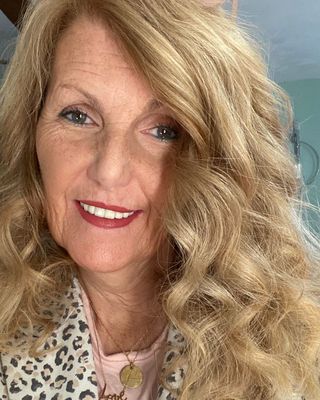
Hosted by Noreen M Farrell
Licensed Master Social Worker, LMSW
Group meets in North Bellmore, NY 11710
Wednesday Night group that meets 2x a month /7-8:30 pm with the aim of Listening/ Hearing, Supporting & Deescalating the range of Emotions and Challenges that come with Life changes. Navigating new family patterns, living arrangements, finances and all that unfolds will be confidentially discussed in the Safety of other Men going through the Process. $40 per session. Call for more Information.
This group focuses on those having difficulty coping with their relationships. They may take on too much responsibility and deal with resentments. Stress is a common factor. The group is supportive and insightful.

Hosted by Diane L Gordon
Clinical Social Work/Therapist, LCSW
Group meets in North Bellmore, NY 11710
This group focuses on those having difficulty coping with their relationships. They may take on too much responsibility and deal with resentments. Stress is a common factor. The group is supportive and insightful.
Thursday Night Hour Session designed to be the Pre Date Pep Talk! First Half of Session is opening the door and discussing stressors, weekly challenges, annoyances, expectations and needs. Second half is dedicated to actively listening, responding and a combination of problem solving, cognitive behavioral assignments and supportive team based approaches to new runways to fun, friendship based , tender, positive, caring exchanges during Date Nights! With Practice, a gradually emerging design & structure can become your New Foundation to increased Happiness and a Stronger Connection. Intimacy is Not achieved through Mind Reading! Honesty, Vulnerability, Active Listening, Trust and yes, some Laughter amidst Chaos is Required.
Hosted by Noreen M Farrell
Licensed Master Social Worker, LMSW
Group meets in North Bellmore, NY 11710
Thursday Night Hour Session designed to be the Pre Date Pep Talk! First Half of Session is opening the door and discussing stressors, weekly challenges, annoyances, expectations and needs. Second half is dedicated to actively listening, responding and a combination of problem solving, cognitive behavioral assignments and supportive team based approaches to new runways to fun, friendship based , tender, positive, caring exchanges during Date Nights! With Practice, a gradually emerging design & structure can become your New Foundation to increased Happiness and a Stronger Connection. Intimacy is Not achieved through Mind Reading! Honesty, Vulnerability, Active Listening, Trust and yes, some Laughter amidst Chaos is Required.

Hosted by Lager Counseling Services
Clinical Social Work/Therapist, LCSW, CASAC
Group meets in North Bellmore, NY 11710
More Groups Nearby
Join our virtual grief group for adults (18+) in NY/NJ/FL!??Grief can be such a confusing and isolating time. It doesn't matter when it happened, how it happened, your relationship, or how old you were. It doesn't matter if you feel angry, sad, numb, relief, somewhere in between, or a mix of all these and more. ?This group provides a space to process and connect with others who truly understand, navigate expected and unexpected triggers, explore and adjust to the potential identity shifts, and learn tools to manage the emotional and physical impacts of grief. ?
Join our virtual grief group for adults (18+) in NY/NJ/FL!??Grief can be such a confusing and isolating time. It doesn't matter when it happened, how it happened, your relationship, or how old you were. It doesn't matter if you feel angry, sad, numb, relief, somewhere in between, or a mix of all these and more. ?This group provides a space to process and connect with others who truly understand, navigate expected and unexpected triggers, explore and adjust to the potential identity shifts, and learn tools to manage the emotional and physical impacts of grief. ?
I am starting a group for women experiencing anxiety and depression. This include dealing with life issues. I love the idea of women supporting one another ! This group will take place every other Wednesday evening at 6:45. I Hope you can participate in this group! I have never run a group for just women before, and I am so excited about it! Please contact me for any questions.
I am starting a group for women experiencing anxiety and depression. This include dealing with life issues. I love the idea of women supporting one another ! This group will take place every other Wednesday evening at 6:45. I Hope you can participate in this group! I have never run a group for just women before, and I am so excited about it! Please contact me for any questions.
This virtual weekly therapy group offers a supportive space for individuals struggling with anxiety related to the current political climate. Facilitated by a licensed art psychotherapist, it focuses on building coping strategies, promoting emotional resilience, and providing a sense of community amidst uncertainty. Participants explore how political events impact their mental health, learn to manage stress and fear, and gain tools to navigate challenging discussions with greater confidence and calm. For ages 18+
This virtual weekly therapy group offers a supportive space for individuals struggling with anxiety related to the current political climate. Facilitated by a licensed art psychotherapist, it focuses on building coping strategies, promoting emotional resilience, and providing a sense of community amidst uncertainty. Participants explore how political events impact their mental health, learn to manage stress and fear, and gain tools to navigate challenging discussions with greater confidence and calm. For ages 18+
Take back your inner and outer safety. Are you remembering incidents in your life that make you feel isolated, hyper-vigilant and unsafe? You may want the opportunity to share experiences with other survivors in a safe, confidential and non-judgmental atmosphere. Small individual groups for women will explore, learn and implement tools for boundary setting, reducing shame and guilt, and creating a map for safety, relatedness, hope and re-connection toward a sense of aliveness and vitality. An adult survivor recovery group, used in conjunction with individual psychotherapy is a meaningful and powerful resource in the healing process.

Hosted by Fran V. Dillon
Clinical Social Work/Therapist, LMSW, CSW
Group meets in New York, NY 10028
Take back your inner and outer safety. Are you remembering incidents in your life that make you feel isolated, hyper-vigilant and unsafe? You may want the opportunity to share experiences with other survivors in a safe, confidential and non-judgmental atmosphere. Small individual groups for women will explore, learn and implement tools for boundary setting, reducing shame and guilt, and creating a map for safety, relatedness, hope and re-connection toward a sense of aliveness and vitality. An adult survivor recovery group, used in conjunction with individual psychotherapy is a meaningful and powerful resource in the healing process.
We are a group of seven talented clinicians, all dedicated to providing excellent mental health care at affordable prices. Our combined clinical expertise and varied treatment modality experiences allow us to address a large spectrum of psychological difficulties. Through a treatment tailored to your needs, we can help you overcome obstacles you are currently facing and, in time, lead a more fulfilling and productive life.

We are a group of seven talented clinicians, all dedicated to providing excellent mental health care at affordable prices. Our combined clinical expertise and varied treatment modality experiences allow us to address a large spectrum of psychological difficulties. Through a treatment tailored to your needs, we can help you overcome obstacles you are currently facing and, in time, lead a more fulfilling and productive life.
This group will provide parents with support and strategies to help guide their interactions with children at home and in social settings. It will help them better understand and improve their relationships with children of varying temperaments including shy and anxious children, children who struggle with separation, attention seeking children, children with sensory sensitivities and children who have challenges with with emotional regulation. This group will respond to concerns about managing sleep, separations, sibling rivalry and limit setting and help you create a more rewarding parent-child relationship.

This group will provide parents with support and strategies to help guide their interactions with children at home and in social settings. It will help them better understand and improve their relationships with children of varying temperaments including shy and anxious children, children who struggle with separation, attention seeking children, children with sensory sensitivities and children who have challenges with with emotional regulation. This group will respond to concerns about managing sleep, separations, sibling rivalry and limit setting and help you create a more rewarding parent-child relationship.
One time a week support group emphasizing strengths and supportive strategies for ADHD. Utilizing DBT, CBT and relational strategies to provide increased self-esteem. 3 month commitment. Please contact me to discuss further information regarding this group.

One time a week support group emphasizing strengths and supportive strategies for ADHD. Utilizing DBT, CBT and relational strategies to provide increased self-esteem. 3 month commitment. Please contact me to discuss further information regarding this group.
Psychodynamically-oriented process group for female survivors of trauma.

Psychodynamically-oriented process group for female survivors of trauma.
This is an in person support group in which we get to know each other and process together our traumatic experiences of sexual abuse, assault and destructive relationships. Women survivors of sexual abuse have been shamed, blamed and labeled negatively. In this group we're reframing slurs like slut, whore and worse and also looking at our self destructive patterns of relating. One requirement for the group is we each be engaged in our own individual psychotherapy.

This is an in person support group in which we get to know each other and process together our traumatic experiences of sexual abuse, assault and destructive relationships. Women survivors of sexual abuse have been shamed, blamed and labeled negatively. In this group we're reframing slurs like slut, whore and worse and also looking at our self destructive patterns of relating. One requirement for the group is we each be engaged in our own individual psychotherapy.
A virtual support group for bi+ (including curious) women and femme people of all relationship statuses to build community, push back against stigmas, and practice resilience skills.

A virtual support group for bi+ (including curious) women and femme people of all relationship statuses to build community, push back against stigmas, and practice resilience skills.
DBT was created by Martha Linehan to treat people suffering with Borderline Personality Disorder, which had previously been deemed untreatable, but I find that DBT skills (including Mindfulness, Interpersonal Effectiveness, Emotional Regulation, and Distress Tolerance) are useful to everyone. Including us! Our Practice has 2 levels of DBT Group. Level 1 focuses skills training/psychoeducation and runs every 12 weeks on Tuesdays at 7pm. Level II supports clients who want support utilizing the skills they have learned in their everyday life on. This group runs on Wednesdays at 7pm on an ongoing basis. For more details, visit our website.

DBT was created by Martha Linehan to treat people suffering with Borderline Personality Disorder, which had previously been deemed untreatable, but I find that DBT skills (including Mindfulness, Interpersonal Effectiveness, Emotional Regulation, and Distress Tolerance) are useful to everyone. Including us! Our Practice has 2 levels of DBT Group. Level 1 focuses skills training/psychoeducation and runs every 12 weeks on Tuesdays at 7pm. Level II supports clients who want support utilizing the skills they have learned in their everyday life on. This group runs on Wednesdays at 7pm on an ongoing basis. For more details, visit our website.
The group will focus on the basic techniques of CBT with a goal of providing support and guidance and allowing individuals to establish relationships with others who can appreciate the daily challenges of OCD.

The group will focus on the basic techniques of CBT with a goal of providing support and guidance and allowing individuals to establish relationships with others who can appreciate the daily challenges of OCD.
Starts February 9th! During this six weeks you will explore this pathway to presence; learning to listen to and trust the cues and guidance that your body offers in real time. It is practiced in a safe and respectful container held by the facilitator and the group. The mover generally moves with eyes closed in order to contact their inner body, witnessed or seen by another. Participants have found it deeply satisfying, surprisingly expansive, touching, and joyful.

Hosted by Shakti Smith
Licensed Master Social Worker, LMSW, RSME, LMT
Group meets in New York, NY 10001
Starts February 9th! During this six weeks you will explore this pathway to presence; learning to listen to and trust the cues and guidance that your body offers in real time. It is practiced in a safe and respectful container held by the facilitator and the group. The mover generally moves with eyes closed in order to contact their inner body, witnessed or seen by another. Participants have found it deeply satisfying, surprisingly expansive, touching, and joyful.
Trauma can disrupt every aspect of life, leaving you feeling vulnerable and disconnected, and profoundly impacting your well-being, relationships, and sense of safety. This weekly virtual support group provides a safe, nonjudgmental space for individuals who have experienced one or more traumatic events (e.g., physical, emotional, or sexual abuse; neglect; domestic violence; bullying; prolonged medical treatments, etc.). Through shared experiences and connections with others, we focus on building resilience and fostering growth, helping you move beyond survival to rediscover hope, connection, and empowerment.

Trauma can disrupt every aspect of life, leaving you feeling vulnerable and disconnected, and profoundly impacting your well-being, relationships, and sense of safety. This weekly virtual support group provides a safe, nonjudgmental space for individuals who have experienced one or more traumatic events (e.g., physical, emotional, or sexual abuse; neglect; domestic violence; bullying; prolonged medical treatments, etc.). Through shared experiences and connections with others, we focus on building resilience and fostering growth, helping you move beyond survival to rediscover hope, connection, and empowerment.
In this group, you'll find a safe place to get support for mental health challenges. I specialize in supporting young people experiencing depression, anxiety, unprocessed trauma, difficulty in relationships at school & at home, difficulty focusing at school & connecting in the world. If you are a musician or artist, this group is perfect for you, as I am a music therapist, creative arts therapist, & singer-songwriter myself. We can use the arts to explore unprocessed emotions & experiences. If meditation & mindfulness is also something you're into, I usually start of each group with some meditation/mindfulness.

Hosted by Jenna Felice Smith
Creative Arts Therapist, MA, LCAT, MT-BC
Group meets in Brooklyn, NY 11222
In this group, you'll find a safe place to get support for mental health challenges. I specialize in supporting young people experiencing depression, anxiety, unprocessed trauma, difficulty in relationships at school & at home, difficulty focusing at school & connecting in the world. If you are a musician or artist, this group is perfect for you, as I am a music therapist, creative arts therapist, & singer-songwriter myself. We can use the arts to explore unprocessed emotions & experiences. If meditation & mindfulness is also something you're into, I usually start of each group with some meditation/mindfulness.
In a world invested in technology and multitasking, people are feeling off balance and isolated. Mindfulness is an art of bringing ourself to the present moment and attending to our body sensations, thoughts and feelings at the same time. In this group, we practice exercises to make a connection with our mind body and learn loving compassion towards ourselves and others. Learn and practice core mindfulness concepts.

In a world invested in technology and multitasking, people are feeling off balance and isolated. Mindfulness is an art of bringing ourself to the present moment and attending to our body sensations, thoughts and feelings at the same time. In this group, we practice exercises to make a connection with our mind body and learn loving compassion towards ourselves and others. Learn and practice core mindfulness concepts.
See more therapy options for North Bellmore


Nearby Searches for North Bellmore
- Baldwin
- Garden City
- Levittown
- Lynbrook
- Massapequa
- Merrick
- Mineola
- Oceanside
- Plainview
- Rockville Centre
- Wantagh
- Westbury
FAQs - About Group Therapy and Support Groups
How can I find a support group in North Bellmore?
To find a support group in your area, start by entering your city, zip code, or the name of the group into the search bar at the top of the page. When searching, consider whether you prefer an in-person or virtual group. This can help you decide how broad your geographic search should be. If you are open to virtual groups, you might want to search by state instead of just your city, especially if there are limited options nearby.
Once you complete your search, you can use the filters to narrow the results by selecting specialties (such as grief, trauma, or eating disorders), therapeutic approaches, age groups, and other criteria to find a group that best fits your needs.
How does group therapy work?
Group therapy is led by one or more trained therapists and provides a space where participants can process their experiences and learn from others facing similar challenges. Groups may focus on a specific issue—such as addiction, grief, physical illnesses, parenting, or caregiving—or they may center around a particular therapeutic approach, such as Cognitive Behavioral Therapy (CBT), social skill development, or Exposure Therapy. Some groups are also designed for specific populations, such as teens, veterans, or LGBTQ+ individuals.
It’s also important to distinguish group therapy from peer-led support groups, like Alcoholics Anonymous. While both can offer valuable support, therapy groups are typically led by licensed professionals and follow a more structured format. Therapy groups often meet for a fixed length of time with a consistent group of members, while many peer support groups meet for an indefinite period of time with members coming and going.
What are the benefits of group therapy?
Group therapy offers several important benefits. It brings together people facing similar challenges—whether related to mental health, physical health, or life transitions—and creates a supportive environment where participants can exchange feedback, share experiences, and learn from one another. Hearing different perspectives can help individuals discover new coping strategies and practical tools they may not have encountered on their own. Sharing personal experiences, such as coping with a serious illness or navigating family struggles, can also reduce feelings of isolation and foster a sense of connection and understanding. In addition to emotional support, group members often gain useful, real-world advice from peers who have faced similar situations.
Group therapy is typically more affordable than individual therapy and, for certain conditions, can be equally effective. Many groups also include structured activities—such as guided journaling, cognitive-behavioral exercises, or role-playing—to help participants develop concrete skills they can apply in daily life.
Is group therapy as effective as individual therapy?
It is difficult to make a blanket statement about the effectiveness of support groups, as they vary widely in focus and the conditions they address. However, support groups can be highly valuable in helping individuals gain emotional support and achieve meaningful treatment outcomes. For certain conditions, such as substance use, research has shown that group therapy can be particularly effective—sometimes just as effective as individual therapy—in supporting long-term recovery.
Many professionals attribute the effectiveness of group therapy to the unique benefits of the group setting, which fosters peer-to-peer learning and a sense of connection through shared experiences. Group settings also offer accountability and encouragement from both facilitators and fellow participants, which helps sustain motivation and supports continued progress. These factors together play a key role in promoting the overall effectiveness of group therapy.
How much does group therapy cost?
Group therapy is typically less expensive than individual therapy, with sessions typically costing between $50 and $75 each. In comparison, individual therapy can cost anywhere from $100 to $200 or more per session, even with insurance. Some therapists or organizations offer low-cost or free group therapy options, particularly through community centers or nonprofit organizations. In some cases, groups may require payment upfront for a set number of sessions, such as paying for six weekly sessions at the first meeting. However, many providers offer payment plans to help make participation more accessible if this upfront payment is required.
Does insurance cover group therapy?
As with individual therapy, insurance coverage for group therapy varies based on factors such as your specific insurance plan, the purpose of the group, your diagnosis, and whether the group provider is in-network. Many insurance plans cover group therapy sessions that address diagnosable mental health conditions, such as substance use disorders, anxiety, or depression.
However, groups that focus on topics not directly tied to a mental health diagnosis—such as parenting support or divorce recovery—are less likely to be covered. Because coverage can vary widely, it’s important to check with your insurance provider before joining a group to confirm whether the sessions will be covered and what out-of-pocket costs you may be responsible for.
How long does group therapy last?
The length of each group therapy session typically ranges from 45 minutes to two hours, depending on the therapy approach, the group’s goals, and how often the group meets. In some cases, group therapy is part of a larger treatment program, such as an Intensive Outpatient Program (IOP), where group sessions complement individual therapy and are scheduled as part of the program’s overall structure.
The duration of participation in a group also varies. Some groups are designed to be short-term, lasting anywhere from 6 to 24 weeks—for example, bereavement groups or skills-based groups like those using Dialectical Behavioral Therapy (DBT). Other groups may be longer-term, lasting a year or more, and some ongoing support groups meet indefinitely, allowing participants to stay as long as they find the group helpful.
What are the limitations of support groups?
Support groups offer many benefits, but they also have certain limitations. Unlike therapy groups, many support groups do not provide formal therapeutic treatment and are not led by licensed mental health professionals. For individuals seeking clinical treatment for specific mental health diagnoses—such as depression, eating disorders, or substance use—individual therapy or group therapy led by a licensed professional may offer more personalized and specialized care.
The effectiveness of a support group also depends heavily on the group’s participants and the overall group dynamic. When members engage respectfully and offer constructive support, the group can foster valuable peer-to-peer learning. However, if certain participants dominate discussions, provide inaccurate advice, or create conflict, it can disrupt the group’s sense of safety and reduce its effectiveness. Confidentiality can also be harder to maintain in support groups, particularly in open groups where participants can join or leave at any time. With new members regularly entering the group, it can be more difficult to build and sustain a consistent sense of trust and privacy.