Support Groups in Fort Myers, FL
This group examines how irrational thoughts influence our feelings and behavior. Group members will learn to identify unhelpful thinking styles, use objective facts to evaluate and challenge those cognitive distortions, and reframe them into more constructive ones. Group therapy benefits participants through providing a safe, accepting, and non-judgmental setting that allows for open communication and expression, and real-time practice. [This group is held weekly. Contact the office for more info.]

This group examines how irrational thoughts influence our feelings and behavior. Group members will learn to identify unhelpful thinking styles, use objective facts to evaluate and challenge those cognitive distortions, and reframe them into more constructive ones. Group therapy benefits participants through providing a safe, accepting, and non-judgmental setting that allows for open communication and expression, and real-time practice. [This group is held weekly. Contact the office for more info.]
Learn to Thrive is a 6-week social-emotional learning (SEL) group designed to help children build skills they can use every day. Through engaging, age-appropriate activities, children will learn to understand and manage emotions, develop healthy coping skills, build confidence and self-esteem, strengthen communication and social skills, solve problems, and navigate friendships and everyday challenges. Groups are offered separately for ages 5–7 and 8–11, allowing activities and discussions to be tailored to each developmental stage. A fun, supportive space to learn, connect, and thrive!
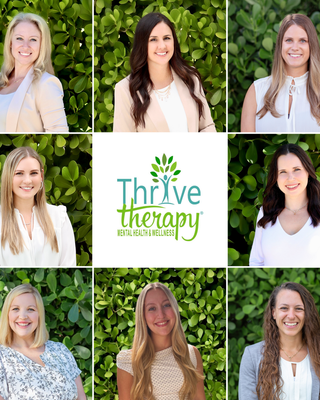
Learn to Thrive is a 6-week social-emotional learning (SEL) group designed to help children build skills they can use every day. Through engaging, age-appropriate activities, children will learn to understand and manage emotions, develop healthy coping skills, build confidence and self-esteem, strengthen communication and social skills, solve problems, and navigate friendships and everyday challenges. Groups are offered separately for ages 5–7 and 8–11, allowing activities and discussions to be tailored to each developmental stage. A fun, supportive space to learn, connect, and thrive!
"Smart but Scattered" is an ADHD/Executive Functioning group for TEENS based on research by Dr. Richard Guare & Dr. Peg Dawson led by one of our licensed school psychologists. This is a closed group with weekly sessions occurring during select seasons annually. Topics Include: Planning & Organization, Avoiding Procrastination, Improving Attention/Focus, Emotion Regulation, Electronics/Social Media Time Management, etc.

"Smart but Scattered" is an ADHD/Executive Functioning group for TEENS based on research by Dr. Richard Guare & Dr. Peg Dawson led by one of our licensed school psychologists. This is a closed group with weekly sessions occurring during select seasons annually. Topics Include: Planning & Organization, Avoiding Procrastination, Improving Attention/Focus, Emotion Regulation, Electronics/Social Media Time Management, etc.
A social skills group for children and adolescents experiencing social impairment led by a licensed psychologist with extensive training in autism spectrum and social anxiety disorders.

A social skills group for children and adolescents experiencing social impairment led by a licensed psychologist with extensive training in autism spectrum and social anxiety disorders.
This is a FREE in-person group for LGBTQ+ Teens aged 14-17 meeting Tuesday evenings Jan 28 - April 22, 2025. Our expressive arts group will allow each member to explore a special part of their lives: Exploring our identities, Self Esteem, Our PRIDE and colors, The Masks We Wear, Expressing Ourselves, Navigating Our Worlds, Amplifying Our Voices, How to Ask for Help & Visualizing the Future We Want. The cost is FREE including materials. Advanced registration is REQUIRED.

Hosted by Florida Art Therapy Services, LLC
Counselor, ATR-BC®, ATCS, LMHC-QS
Group meets in Fort Myers, FL 33907
This is a FREE in-person group for LGBTQ+ Teens aged 14-17 meeting Tuesday evenings Jan 28 - April 22, 2025. Our expressive arts group will allow each member to explore a special part of their lives: Exploring our identities, Self Esteem, Our PRIDE and colors, The Masks We Wear, Expressing Ourselves, Navigating Our Worlds, Amplifying Our Voices, How to Ask for Help & Visualizing the Future We Want. The cost is FREE including materials. Advanced registration is REQUIRED.
This seminar will benefit dementia care partners, dementia or other long-term caregivers, family and friends of individuals with a dementia diagnosis, and anyone wondering if they or their loved one might have dementia. In addition, it will serve to equip any church member to serve in a way that provides tangible care to another family or individual. Register on-line or at the Ticket Counter. Nancy Perez, 239-689-2554 nancy.perez@mcgregor.net. Kim Mitchell - Ministering to Caregivers https://youtu.be/yJbRv5HcvDY

Hosted by Tatjana Reyes Jobsky
Marriage & Family Therapist, MA, LMFT
Group meets in Fort Myers, FL 33966
This seminar will benefit dementia care partners, dementia or other long-term caregivers, family and friends of individuals with a dementia diagnosis, and anyone wondering if they or their loved one might have dementia. In addition, it will serve to equip any church member to serve in a way that provides tangible care to another family or individual. Register on-line or at the Ticket Counter. Nancy Perez, 239-689-2554 nancy.perez@mcgregor.net. Kim Mitchell - Ministering to Caregivers https://youtu.be/yJbRv5HcvDY
Starting September 2024: Are you seeking a supportive community of women who understand and uplift each other? Look no further than our Women's Therapy Group, where connection and healing thrive together. Come and be heard while connecting with other women, each on her own journey of personal growth. This ongoing therapy group is offered to adult women who are struggling with issues related to anxiety, depression, and/or interpersonal conflict, or for those just looking for greater meaning in their lives. Text 239-940-6937 for more information.

Starting September 2024: Are you seeking a supportive community of women who understand and uplift each other? Look no further than our Women's Therapy Group, where connection and healing thrive together. Come and be heard while connecting with other women, each on her own journey of personal growth. This ongoing therapy group is offered to adult women who are struggling with issues related to anxiety, depression, and/or interpersonal conflict, or for those just looking for greater meaning in their lives. Text 239-940-6937 for more information.
GCMHC provide opportunities for counselors to earn Continuing Education Units (CEUs) in the field: Board Member.

GCMHC provide opportunities for counselors to earn Continuing Education Units (CEUs) in the field: Board Member.
Eating Disorder Recovery Support Group

Hosted by Maria Ortiz
Licensed Mental Health Counselor, MS, LMHC, CEDS
Group meets in Fort Myers, FL 33907
Eating Disorder Recovery Support Group
Be The Change Therapy Services, LLC proudly provides a safe, supportive space to facilitate growth, self-exploration, resilience, and meaningful change. Supporting children and adults in Southwest Florida. ~Be the change you wish to see in the world~

Be The Change Therapy Services, LLC proudly provides a safe, supportive space to facilitate growth, self-exploration, resilience, and meaningful change. Supporting children and adults in Southwest Florida. ~Be the change you wish to see in the world~
The Buffalo Women Healing Grief Support Group is a sacred virtual space for women navigating loss, inspired by the resilience of buffalo who face storms together. In this 5–8 session series, offered throughout the year, we explore grief with tenderness, courage, and compassion. Through guided reflection, sharing, and community support, participants are invited to honor their grief while moving toward healing and renewal. Together we create a safe space to witness one another through loss, growth, and transformation. We believe healing happens in connection — facing grief side by side, with courage, wisdom, and the strength of community.

Hosted by Barbara Joan Segura
Licensed Professional Counselor, MEd, LPC, LCMHC
Group meets in Fort Myers, FL 33916
The Buffalo Women Healing Grief Support Group is a sacred virtual space for women navigating loss, inspired by the resilience of buffalo who face storms together. In this 5–8 session series, offered throughout the year, we explore grief with tenderness, courage, and compassion. Through guided reflection, sharing, and community support, participants are invited to honor their grief while moving toward healing and renewal. Together we create a safe space to witness one another through loss, growth, and transformation. We believe healing happens in connection — facing grief side by side, with courage, wisdom, and the strength of community.
Many people have a problem with "accumulation" of too many things, whether it is paperwork, valued possessions or even unwanted possessions. Whether you have this problem yourself or live with someone who does, you are welcome to attend these meetings. You will find support, strategies to recover from clutter accumulation, and a safe, discreet place to talk.

Many people have a problem with "accumulation" of too many things, whether it is paperwork, valued possessions or even unwanted possessions. Whether you have this problem yourself or live with someone who does, you are welcome to attend these meetings. You will find support, strategies to recover from clutter accumulation, and a safe, discreet place to talk.
Teenage girls who experience difficulties interacting with their peers. Girls who may be shy and feel awkward in social situations. Girls who experience difficulties expressing themselves when among other teens. Girls who experience anxiety just by the thought of initiating or befriending other girls and boys
Teenage girls who experience difficulties interacting with their peers. Girls who may be shy and feel awkward in social situations. Girls who experience difficulties expressing themselves when among other teens. Girls who experience anxiety just by the thought of initiating or befriending other girls and boys
Menopause and Mental Health Tools from ACT, DBT, and CBT to Manage Mood Symptoms, Body Image and More. Designed for women to gain insight on how perimenopause and menopause can affect their emotional and physical well-being. Recognizing symptoms, developing healthy coping strategies- exploring non-hormonal approaches to support their well-being. Providing safe and supportive environment where women can share experiences, normalize the changes associated with menopause, build emotional resilience, and feel empowered to make informed decisions about their health and wellness. LETS GO WOMEN !!!!!!!!

Hosted by Danayde Vives-Fernandez
Licensed Mental Health Counselor, LMHC
Group meets in Fort Myers, FL 33919
Menopause and Mental Health Tools from ACT, DBT, and CBT to Manage Mood Symptoms, Body Image and More. Designed for women to gain insight on how perimenopause and menopause can affect their emotional and physical well-being. Recognizing symptoms, developing healthy coping strategies- exploring non-hormonal approaches to support their well-being. Providing safe and supportive environment where women can share experiences, normalize the changes associated with menopause, build emotional resilience, and feel empowered to make informed decisions about their health and wellness. LETS GO WOMEN !!!!!!!!
"Smart but Scattered" is an ADHD/Executive Functioning group for TEENS based on research by Dr. Richard Guare & Dr. Peg Dawson led by one of our licensed school psychologists. This is a closed group with weekly sessions occurring during select seasons annually. Topics Include: Planning & Organization, Avoiding Procrastination, Improving Attention/Focus, Emotion Regulation, Electronics/Social Media Time Management, etc.

"Smart but Scattered" is an ADHD/Executive Functioning group for TEENS based on research by Dr. Richard Guare & Dr. Peg Dawson led by one of our licensed school psychologists. This is a closed group with weekly sessions occurring during select seasons annually. Topics Include: Planning & Organization, Avoiding Procrastination, Improving Attention/Focus, Emotion Regulation, Electronics/Social Media Time Management, etc.
Now is the time to follow your dreams. Your time is too precious to waste in fruitless endeavors. Gain focus and clarity on your life purpose, dreams, discovering about your personality, passions, strengths. Obstacles are a normal part of life, learn how to navigate optimally. See it, Speak it and build a step by step plan towards it's fulfillment. Live life on purpose!

Hosted by Wendy Wolf Petzel
Marriage & Family Therapist, PhD, MA, LMFT
Group meets in Fort Myers, FL 33907
Now is the time to follow your dreams. Your time is too precious to waste in fruitless endeavors. Gain focus and clarity on your life purpose, dreams, discovering about your personality, passions, strengths. Obstacles are a normal part of life, learn how to navigate optimally. See it, Speak it and build a step by step plan towards it's fulfillment. Live life on purpose!
BreakFree Therapy Services runs an in person Eating Disorders Recovery group for teens and/or adults. The group addresses a variety of themes, including the process of recovery, improving positive body image, ways to learn to cope with common factors in recovery, improve self-esteem, and most importantly support from others! The new group 12-week cycle begins Thursday October 9th, 2025, via zoom and currently accepting new members.

BreakFree Therapy Services runs an in person Eating Disorders Recovery group for teens and/or adults. The group addresses a variety of themes, including the process of recovery, improving positive body image, ways to learn to cope with common factors in recovery, improve self-esteem, and most importantly support from others! The new group 12-week cycle begins Thursday October 9th, 2025, via zoom and currently accepting new members.
We offer DCF approved Parenting Classes. We offer classes online at myserenitycounselor.com (click on the "parenting classes" link at the top of the home page). At this time no in-person classes are offered.

Hosted by Janean Bromley, MS, LMHC
Licensed Mental Health Counselor, MS, LMHC
Group meets in Fort Myers, FL 33901
We offer DCF approved Parenting Classes. We offer classes online at myserenitycounselor.com (click on the "parenting classes" link at the top of the home page). At this time no in-person classes are offered.
This monthly consultation group is designed for clinicians pursuing EMDRIA Certification who want to deepen their understanding of EMDR beyond the standard protocol. Led by Dr. Julie Riley, LCSW, PhD, EMDRIA Approved Consultant, consultation emphasizes relational and attachment-focused EMDR, case conceptualization, complex trauma, dissociation, and parts work. The group provides a warm, collaborative environment where clinicians can ask questions, present cases, build confidence, and develop greater competence and authenticity as EMDR therapists.

Hosted by Dr. Julie Riley
Clinical Social Work/Therapist, PhD, LCSW, MEd
Group meets in Fort Myers, FL 33907
This monthly consultation group is designed for clinicians pursuing EMDRIA Certification who want to deepen their understanding of EMDR beyond the standard protocol. Led by Dr. Julie Riley, LCSW, PhD, EMDRIA Approved Consultant, consultation emphasizes relational and attachment-focused EMDR, case conceptualization, complex trauma, dissociation, and parts work. The group provides a warm, collaborative environment where clinicians can ask questions, present cases, build confidence, and develop greater competence and authenticity as EMDR therapists.
"Bringing Baby Home®" is a research-based program to help prepare new parents to life with a new baby. During this program (offered in-person and virtually!), one of our licensed clinical psychologists (a Bringing Baby Home® Educator) will teach families about the transition to parenthood using the BBH curriculum. Goals of BBH include learning ways to: maintain relationship satisfaction after having a baby, reduce relationship hostility and increase affection, and promote positive parent-baby interactions. Children of couples who take the BBH workshop were shown to: develop the ability to self-soothe, sleep longer, learn complex language earlier, and cry less!
"Bringing Baby Home®" is a research-based program to help prepare new parents to life with a new baby. During this program (offered in-person and virtually!), one of our licensed clinical psychologists (a Bringing Baby Home® Educator) will teach families about the transition to parenthood using the BBH curriculum. Goals of BBH include learning ways to: maintain relationship satisfaction after having a baby, reduce relationship hostility and increase affection, and promote positive parent-baby interactions. Children of couples who take the BBH workshop were shown to: develop the ability to self-soothe, sleep longer, learn complex language earlier, and cry less!
See more therapy options for Fort Myers


Nearby Searches for Fort Myers
See More Support Groups FAQs - About Group Therapy and Support Groups
How can I find a support group in Fort Myers?
To find a support group in your area, start by entering your city, zip code, or the name of the group into the search bar at the top of the page. When searching, consider whether you prefer an in-person or virtual group. This can help you decide how broad your geographic search should be. If you are open to virtual groups, you might want to search by state instead of just your city, especially if there are limited options nearby.
Once you complete your search, you can use the filters to narrow the results by selecting specialties (such as grief, trauma, or eating disorders), therapeutic approaches, age groups, and other criteria to find a group that best fits your needs.
Once you complete your search, you can use the filters to narrow the results by selecting specialties (such as grief, trauma, or eating disorders), therapeutic approaches, age groups, and other criteria to find a group that best fits your needs.
How does group therapy work?
Group therapy is led by one or more trained therapists and provides a space where participants can process their experiences and learn from others facing similar challenges. Groups may focus on a specific issue—such as addiction, grief, physical illnesses, parenting, or caregiving—or they may center around a particular therapeutic approach, such as Cognitive Behavioral Therapy (CBT), social skill development, or Exposure Therapy. Some groups are also designed for specific populations, such as teens, veterans, or LGBTQ+ individuals.
It’s also important to distinguish group therapy from peer-led support groups, like Alcoholics Anonymous. While both can offer valuable support, therapy groups are typically led by licensed professionals and follow a more structured format. Therapy groups often meet for a fixed length of time with a consistent group of members, while many peer support groups meet for an indefinite period of time with members coming and going.
It’s also important to distinguish group therapy from peer-led support groups, like Alcoholics Anonymous. While both can offer valuable support, therapy groups are typically led by licensed professionals and follow a more structured format. Therapy groups often meet for a fixed length of time with a consistent group of members, while many peer support groups meet for an indefinite period of time with members coming and going.
What are the benefits of group therapy?
Group therapy offers several important benefits. It brings together people facing similar challenges—whether related to mental health, physical health, or life transitions—and creates a supportive environment where participants can exchange feedback, share experiences, and learn from one another. Hearing different perspectives can help individuals discover new coping strategies and practical tools they may not have encountered on their own. Sharing personal experiences, such as coping with a serious illness or navigating family struggles, can also reduce feelings of isolation and foster a sense of connection and understanding. In addition to emotional support, group members often gain useful, real-world advice from peers who have faced similar situations.
Group therapy is typically more affordable than individual therapy and, for certain conditions, can be equally effective. Many groups also include structured activities—such as guided journaling, cognitive-behavioral exercises, or role-playing—to help participants develop concrete skills they can apply in daily life.
Group therapy is typically more affordable than individual therapy and, for certain conditions, can be equally effective. Many groups also include structured activities—such as guided journaling, cognitive-behavioral exercises, or role-playing—to help participants develop concrete skills they can apply in daily life.
Is group therapy as effective as individual therapy?
It is difficult to make a blanket statement about the effectiveness of support groups, as they vary widely in focus and the conditions they address. However, support groups can be highly valuable in helping individuals gain emotional support and achieve meaningful treatment outcomes. For certain conditions, such as substance use, research has shown that group therapy can be particularly effective—sometimes just as effective as individual therapy—in supporting long-term recovery.
Many professionals attribute the effectiveness of group therapy to the unique benefits of the group setting, which fosters peer-to-peer learning and a sense of connection through shared experiences. Group settings also offer accountability and encouragement from both facilitators and fellow participants, which helps sustain motivation and supports continued progress. These factors together play a key role in promoting the overall effectiveness of group therapy.
Many professionals attribute the effectiveness of group therapy to the unique benefits of the group setting, which fosters peer-to-peer learning and a sense of connection through shared experiences. Group settings also offer accountability and encouragement from both facilitators and fellow participants, which helps sustain motivation and supports continued progress. These factors together play a key role in promoting the overall effectiveness of group therapy.
How much does group therapy cost?
Group therapy is typically less expensive than individual therapy, with sessions typically costing between $50 and $75 each. In comparison, individual therapy can cost anywhere from $100 to $200 or more per session, even with insurance. Some therapists or organizations offer low-cost or free group therapy options, particularly through community centers or nonprofit organizations. In some cases, groups may require payment upfront for a set number of sessions, such as paying for six weekly sessions at the first meeting. However, many providers offer payment plans to help make participation more accessible if this upfront payment is required.
Does insurance cover group therapy?
As with individual therapy, insurance coverage for group therapy varies based on factors such as your specific insurance plan, the purpose of the group, your diagnosis, and whether the group provider is in-network. Many insurance plans cover group therapy sessions that address diagnosable mental health conditions, such as substance use disorders, anxiety, or depression.
However, groups that focus on topics not directly tied to a mental health diagnosis—such as parenting support or divorce recovery—are less likely to be covered. Because coverage can vary widely, it’s important to check with your insurance provider before joining a group to confirm whether the sessions will be covered and what out-of-pocket costs you may be responsible for.
However, groups that focus on topics not directly tied to a mental health diagnosis—such as parenting support or divorce recovery—are less likely to be covered. Because coverage can vary widely, it’s important to check with your insurance provider before joining a group to confirm whether the sessions will be covered and what out-of-pocket costs you may be responsible for.
How long does group therapy last?
The length of each group therapy session typically ranges from 45 minutes to two hours, depending on the therapy approach, the group’s goals, and how often the group meets. In some cases, group therapy is part of a larger treatment program, such as an Intensive Outpatient Program (IOP), where group sessions complement individual therapy and are scheduled as part of the program’s overall structure.
The duration of participation in a group also varies. Some groups are designed to be short-term, lasting anywhere from 6 to 24 weeks—for example, bereavement groups or skills-based groups like those using Dialectical Behavioral Therapy (DBT). Other groups may be longer-term, lasting a year or more, and some ongoing support groups meet indefinitely, allowing participants to stay as long as they find the group helpful.
The duration of participation in a group also varies. Some groups are designed to be short-term, lasting anywhere from 6 to 24 weeks—for example, bereavement groups or skills-based groups like those using Dialectical Behavioral Therapy (DBT). Other groups may be longer-term, lasting a year or more, and some ongoing support groups meet indefinitely, allowing participants to stay as long as they find the group helpful.
What are the limitations of support groups?
Support groups offer many benefits, but they also have certain limitations. Unlike therapy groups, many support groups do not provide formal therapeutic treatment and are not led by licensed mental health professionals. For individuals seeking clinical treatment for specific mental health diagnoses—such as depression, eating disorders, or substance use—individual therapy or group therapy led by a licensed professional may offer more personalized and specialized care.
The effectiveness of a support group also depends heavily on the group’s participants and the overall group dynamic. When members engage respectfully and offer constructive support, the group can foster valuable peer-to-peer learning. However, if certain participants dominate discussions, provide inaccurate advice, or create conflict, it can disrupt the group’s sense of safety and reduce its effectiveness. Confidentiality can also be harder to maintain in support groups, particularly in open groups where participants can join or leave at any time. With new members regularly entering the group, it can be more difficult to build and sustain a consistent sense of trust and privacy.
The effectiveness of a support group also depends heavily on the group’s participants and the overall group dynamic. When members engage respectfully and offer constructive support, the group can foster valuable peer-to-peer learning. However, if certain participants dominate discussions, provide inaccurate advice, or create conflict, it can disrupt the group’s sense of safety and reduce its effectiveness. Confidentiality can also be harder to maintain in support groups, particularly in open groups where participants can join or leave at any time. With new members regularly entering the group, it can be more difficult to build and sustain a consistent sense of trust and privacy.