Support Groups in 20784
https://www.thebridgeswellnessgroup.com/

Hosted by Dr. Tricialand M. Hilliard T
Licensed Clinical Professional Counselor, EdD, LCPC, NBCC, CAGCS, ACS
Group meets in Hyattsville, MD 20784
https://www.thebridgeswellnessgroup.com/
More Groups Nearby
Empower Kids is a supportive group for elementary-aged children to build confidence, emotional awareness, and essential life skills through fun, play-based learning. Led by a licensed counselor and former elementary school teacher, the group helps kids strengthen communication, empathy, self-regulation, and problem-solving in an age-appropriate, engaging way. Children are grouped by grade level and guided through interactive activities that promote resilience and healthy social development. Empower Kids provides a safe space for children to express themselves, connect with peers, and grow in both emotional and interpersonal skills that support success in and outside the classroom.

Empower Kids is a supportive group for elementary-aged children to build confidence, emotional awareness, and essential life skills through fun, play-based learning. Led by a licensed counselor and former elementary school teacher, the group helps kids strengthen communication, empathy, self-regulation, and problem-solving in an age-appropriate, engaging way. Children are grouped by grade level and guided through interactive activities that promote resilience and healthy social development. Empower Kids provides a safe space for children to express themselves, connect with peers, and grow in both emotional and interpersonal skills that support success in and outside the classroom.
When we marry someone with kids from a previous relationship, we hope it will be easier—but reality often hits hard. The kids can feel like little terrorists, ex-spouses add pressure, and the challenges seem endless. I know this firsthand: my husband and I are about to celebrate our 10th anniversary with five kids between us, ages 6 to 27. This 8-week Zoom group is a space for couples to share real struggles, receive psychoeducation and practice co-parenting strategies. $60/session or $50 if prepaid. Email to join the waitlist. www.innazusman.com/coming-soon-03

When we marry someone with kids from a previous relationship, we hope it will be easier—but reality often hits hard. The kids can feel like little terrorists, ex-spouses add pressure, and the challenges seem endless. I know this firsthand: my husband and I are about to celebrate our 10th anniversary with five kids between us, ages 6 to 27. This 8-week Zoom group is a space for couples to share real struggles, receive psychoeducation and practice co-parenting strategies. $60/session or $50 if prepaid. Email to join the waitlist. www.innazusman.com/coming-soon-03
This 12-week therapy group is for high-school girls who would like to learn skills to better manage difficult and intense emotions that can be overwhelming, communicate more effectively with others, and develop healthy relationships that enhance emotional well-being. Topics will include coping skills, problem-solving, mindfulness skills, emotional regulation strategies to deal with strong feelings, distinguishing between healthy & unhealthy relationships, effective communication methods to express needs and concerns to others, self-care and self-compassion techniques, as well as giving and receiving support from peers. The group is led by Dr. Natalia Vallejos, an experienced licensed psychologist.

This 12-week therapy group is for high-school girls who would like to learn skills to better manage difficult and intense emotions that can be overwhelming, communicate more effectively with others, and develop healthy relationships that enhance emotional well-being. Topics will include coping skills, problem-solving, mindfulness skills, emotional regulation strategies to deal with strong feelings, distinguishing between healthy & unhealthy relationships, effective communication methods to express needs and concerns to others, self-care and self-compassion techniques, as well as giving and receiving support from peers. The group is led by Dr. Natalia Vallejos, an experienced licensed psychologist.
Do you dread “that time of the month?” Do you experience stress, fatigue, and mood changes? Do you feel at odd with yourself when trying to accomplish tasks? Did you know this could be your cycle? Often we are pressured to conform to a 24/7 culture when we are in fact cyclical beings...Learn Menstrual Cycle Awareness to become in sync with yourself and harness the natural powers of your monthly rhythm. Each session will include didactic learning, group sharing, attunement to body and concrete practices to try. (Wellness group, not therapy--open to any who can join virtually)

Hosted by Kristine Purcell
Licensed Clinical Professional Counselor, BC-DMT, LCPC, PMH-C
Group meets in Annapolis, MD 21409
Do you dread “that time of the month?” Do you experience stress, fatigue, and mood changes? Do you feel at odd with yourself when trying to accomplish tasks? Did you know this could be your cycle? Often we are pressured to conform to a 24/7 culture when we are in fact cyclical beings...Learn Menstrual Cycle Awareness to become in sync with yourself and harness the natural powers of your monthly rhythm. Each session will include didactic learning, group sharing, attunement to body and concrete practices to try. (Wellness group, not therapy--open to any who can join virtually)
Thursday evenings at 5:30 PM, this series rotates between gender-specific and co-ed support groups for teens ages 14–18. Rising Strong serves young men, Empower Her serves young women, and United Voices brings all participants together on the last Thursday of each month. Through education, discussion, and peer support, participants explore substance use prevention, emotional wellness, healthy relationships, communication, leadership, coping skills, decision-making, and preparation for adulthood in a safe and supportive environment.
Thursday evenings at 5:30 PM, this series rotates between gender-specific and co-ed support groups for teens ages 14–18. Rising Strong serves young men, Empower Her serves young women, and United Voices brings all participants together on the last Thursday of each month. Through education, discussion, and peer support, participants explore substance use prevention, emotional wellness, healthy relationships, communication, leadership, coping skills, decision-making, and preparation for adulthood in a safe and supportive environment.
Group that focuses on different techniques to manage your stress in a healthier way.
Hosted by Peaceful Mind, LLC
Licensed Clinical Professional Counselor, LCPC, ACS, BC-TMH
Group meets in Upper Marlboro, MD 20774
Group that focuses on different techniques to manage your stress in a healthier way.
We provide evaluation, diagnosis and treatment from our expertise.

We provide evaluation, diagnosis and treatment from our expertise.
Social connection groups for neurodivergent elementary, middle and high schoolers are a place where children, tweens, and teens can connect in the ways that are most natural for them, with peers who have similar interests and overlapping neurotypes. We’ll be using Konfident Kidz & AUsome Training’s social communication activities created by neurodivergent teachers and utilized with permission from the primary creator. In these groups we do not teach neurotypical social skills. Rather, we help kids and teens fully embrace who they are while navigating the predominately neurotypical world.

Social connection groups for neurodivergent elementary, middle and high schoolers are a place where children, tweens, and teens can connect in the ways that are most natural for them, with peers who have similar interests and overlapping neurotypes. We’ll be using Konfident Kidz & AUsome Training’s social communication activities created by neurodivergent teachers and utilized with permission from the primary creator. In these groups we do not teach neurotypical social skills. Rather, we help kids and teens fully embrace who they are while navigating the predominately neurotypical world.
This program is a Therapeutically Applied Role-Playing Game Social Skills group. In this group, I am a licensed mental health therapist who uses Dungeons and Dragons to help you work on mental health and social skills goals. It is not just a game of D&D but a form of mental health social skills group therapy.
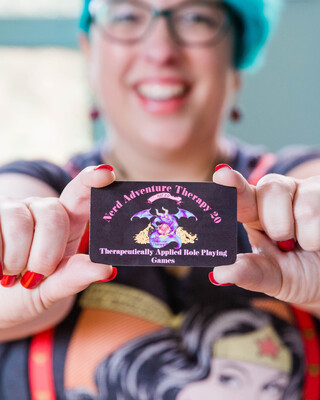
Hosted by Nerd Adventure Therapy 20
Clinical Social Work/Therapist, LCSW-C
Group meets in Linthicum Heights, MD 21090
This program is a Therapeutically Applied Role-Playing Game Social Skills group. In this group, I am a licensed mental health therapist who uses Dungeons and Dragons to help you work on mental health and social skills goals. It is not just a game of D&D but a form of mental health social skills group therapy.
Dialectical Behavior Therapy is a type of CBT that focuses on under-control (DBT) and unstable interpersonal relationships. It is typically combined with group therapy and phone-coaching. The Center offers DBT for borderline personality disorder, bulimia nervosa, binge eating disorder, and anorexia nervosa.
Hosted by Clarity Rose Mental Health and Wellness Center
Psychologist, PhD, PSYPACT
Group meets in Silver Spring, MD 20910
Dialectical Behavior Therapy is a type of CBT that focuses on under-control (DBT) and unstable interpersonal relationships. It is typically combined with group therapy and phone-coaching. The Center offers DBT for borderline personality disorder, bulimia nervosa, binge eating disorder, and anorexia nervosa.
Cognitive Connections is a workshop designed specifically for individuals with a diagnosis of mild to moderate dementia. Based on principles of cognitive stimulation therapy, it combines social interaction with organized activities intended to stimulate memory, concentration, and other cognitive processes. A new 8-week session is starting soon. Please contact us to learn more!

Cognitive Connections is a workshop designed specifically for individuals with a diagnosis of mild to moderate dementia. Based on principles of cognitive stimulation therapy, it combines social interaction with organized activities intended to stimulate memory, concentration, and other cognitive processes. A new 8-week session is starting soon. Please contact us to learn more!
Join our Dialectical Behavior Therapy (DBT) skills group in Maryland and Delaware, designed to provide depression help, panic attack treatment, and support for trust issues. Learn core DBT skills—mindfulness, distress tolerance, emotion regulation, and interpersonal effectiveness—to reduce anxiety, manage stress, and strengthen relationships. Each session blends DBT therapy skill-building with supportive group discussion in a safe, understanding environment. Whether you’re coping with trauma, relationship struggles, or overwhelming emotions, DBT therapy offers practical tools for lasting change and greater balance in daily life. Join now!

Join our Dialectical Behavior Therapy (DBT) skills group in Maryland and Delaware, designed to provide depression help, panic attack treatment, and support for trust issues. Learn core DBT skills—mindfulness, distress tolerance, emotion regulation, and interpersonal effectiveness—to reduce anxiety, manage stress, and strengthen relationships. Each session blends DBT therapy skill-building with supportive group discussion in a safe, understanding environment. Whether you’re coping with trauma, relationship struggles, or overwhelming emotions, DBT therapy offers practical tools for lasting change and greater balance in daily life. Join now!
Our Caregiver Support Group offers a place to learn from the experiences of others and to encourage those who are in similar circumstances. Even when caring for a loved one is an act of love, it still takes many new skills and energy. This group is comprised mostly of spouses in their 70s-80s caring for their partners. Some sessions will spotlight expert guest speakers on various topics to support you in your caregiving journey. Most sessions will allow time for questions and group discussion.

Hosted by Erica Greenspan
Clinical Social Work/Therapist, LCSW-C, LICSW
Group meets in Bethesda, MD 20817
Our Caregiver Support Group offers a place to learn from the experiences of others and to encourage those who are in similar circumstances. Even when caring for a loved one is an act of love, it still takes many new skills and energy. This group is comprised mostly of spouses in their 70s-80s caring for their partners. Some sessions will spotlight expert guest speakers on various topics to support you in your caregiving journey. Most sessions will allow time for questions and group discussion.
This therapy group is designed specifically for Black men seeking support with anxiety, depression, stress, burnout, and emotional well-being. Group provides a confidential space where Black men can openly discuss life pressures, mental health challenges, and personal growth without judgment. Many Black men experience stress related to work, relationships, family expectations, racial stress, and emotional isolation. This group acknowledges those realities while emphasizing practical coping tools, emotional awareness, and peer support. Sessions are structured and therapist-led, combining guided discussion with evidence-based strategies that support mental health, resilience, and connection. Participants choose what they share comfortably safely.

Hosted by My 4 Seasons Counseling LLC Group Practice
Licensed Clinical Professional Counselor, MA, LCPC, LPC
Group meets in Fort Washington, MD 20744
This therapy group is designed specifically for Black men seeking support with anxiety, depression, stress, burnout, and emotional well-being. Group provides a confidential space where Black men can openly discuss life pressures, mental health challenges, and personal growth without judgment. Many Black men experience stress related to work, relationships, family expectations, racial stress, and emotional isolation. This group acknowledges those realities while emphasizing practical coping tools, emotional awareness, and peer support. Sessions are structured and therapist-led, combining guided discussion with evidence-based strategies that support mental health, resilience, and connection. Participants choose what they share comfortably safely.
Breathe. Slow Down. Join us for a weekly drop-in mindfulness meditation class at Journey Mindfulness—an open, welcoming space to pause, reconnect, and find your center. Whether you're new to meditation or returning to your practice, these guided sessions help you release stress and return to presence with clarity and compassion. Mondays at 10:30 AM. 25$. Learn more at JourneyMindfulness.com Come as you are. Leave a little more grounded.

Hosted by James O'Neill
Licensed Clinical Professional Counselor, LCPC
Group meets in Ellicott City, MD 21042
Breathe. Slow Down. Join us for a weekly drop-in mindfulness meditation class at Journey Mindfulness—an open, welcoming space to pause, reconnect, and find your center. Whether you're new to meditation or returning to your practice, these guided sessions help you release stress and return to presence with clarity and compassion. Mondays at 10:30 AM. 25$. Learn more at JourneyMindfulness.com Come as you are. Leave a little more grounded.
Led Life Psychiatry supports people in the DMV who want to live and stay depression free by providing mental health guidance one step at a time. We provide safe, Trauma Informed care in a relaxing atmosphere in Ellicott City, MD for those in need of Spravato (Esketamine), Ketamine, and TMS (Transcranial Magnetic Stimulation). **Please note all in office appointments are by APPOINTMENT ONLY**

Hosted by Bergina Brickhouse Isbell
Psychiatrist, MD, MHS, DipABPN
Group meets in Ellicott City, MD 21043
Led Life Psychiatry supports people in the DMV who want to live and stay depression free by providing mental health guidance one step at a time. We provide safe, Trauma Informed care in a relaxing atmosphere in Ellicott City, MD for those in need of Spravato (Esketamine), Ketamine, and TMS (Transcranial Magnetic Stimulation). **Please note all in office appointments are by APPOINTMENT ONLY**
Worried your teen may not graduate high school or college? Are you struggling to like your son or daughter right now? Do you need to help them but are not really sure where to start? Come to one of our virtual parent support groups via Zoom. Every Thursday night, parents come together at and help each other as they navigate the challenges of helping their teen or young adult who struggles with drugs, alcohol, and mental health concerns. Parent support groups are free and open to all parents to attend. No program affiliation is required. (https://www.sandstonecare.com/parents/)

Hosted by Sandstone Care Teen & Young Adult Treatment Center
Treatment Center, MD, LPC, LAC, CAC-III, CSAC-A
Group meets in Rockville, MD 20852
Worried your teen may not graduate high school or college? Are you struggling to like your son or daughter right now? Do you need to help them but are not really sure where to start? Come to one of our virtual parent support groups via Zoom. Every Thursday night, parents come together at and help each other as they navigate the challenges of helping their teen or young adult who struggles with drugs, alcohol, and mental health concerns. Parent support groups are free and open to all parents to attend. No program affiliation is required. (https://www.sandstonecare.com/parents/)
Join Dr. Philip Thorn in a class for adults who have experienced trouble due to their temper or underlying anger. In this class, you will learn twelve core competencies for managing anger effectively. As you learn new ways to process anger and find peace, you will master and cultivate your skill in the areas of: 1) Managing stress, 2) Defusing anger, 3) Communicating respect, 4) Resolving Conflict, and 5) Showing compassion. Dr. Thorn is a trusted and experienced professional, This class is recognized by other health professionals, attorneys, and criminal justice professionals as the premier program in this area.

Hosted by Dr. Philip A Thorn
Licensed Clinical Professional Counselor, LCPC
Group meets in Waldorf, MD 20602
Join Dr. Philip Thorn in a class for adults who have experienced trouble due to their temper or underlying anger. In this class, you will learn twelve core competencies for managing anger effectively. As you learn new ways to process anger and find peace, you will master and cultivate your skill in the areas of: 1) Managing stress, 2) Defusing anger, 3) Communicating respect, 4) Resolving Conflict, and 5) Showing compassion. Dr. Thorn is a trusted and experienced professional, This class is recognized by other health professionals, attorneys, and criminal justice professionals as the premier program in this area.
Empowered Emotions is a supportive group dedicated to helping teen girls understand and manage their emotions effectively. Through engaging discussions and activities, participants learn to identify their feelings, recognize triggers, and develop healthier responses. The group also focuses on building emotional resilience by teaching practical coping strategies, such as mindfulness and positive communication.

Hosted by Kasandra Marbury
Clinical Social Work/Therapist, LCSW
Group meets in Catonsville, MD 21228
Empowered Emotions is a supportive group dedicated to helping teen girls understand and manage their emotions effectively. Through engaging discussions and activities, participants learn to identify their feelings, recognize triggers, and develop healthier responses. The group also focuses on building emotional resilience by teaching practical coping strategies, such as mindfulness and positive communication.
See more therapy options for 20784


FAQs - About Group Therapy and Support Groups
How can I find a support group in 20784?
To find a support group in your area, start by entering your city, zip code, or the name of the group into the search bar at the top of the page. When searching, consider whether you prefer an in-person or virtual group. This can help you decide how broad your geographic search should be. If you are open to virtual groups, you might want to search by state instead of just your city, especially if there are limited options nearby.
Once you complete your search, you can use the filters to narrow the results by selecting specialties (such as grief, trauma, or eating disorders), therapeutic approaches, age groups, and other criteria to find a group that best fits your needs.
How does group therapy work?
Group therapy is led by one or more trained therapists and provides a space where participants can process their experiences and learn from others facing similar challenges. Groups may focus on a specific issue—such as addiction, grief, physical illnesses, parenting, or caregiving—or they may center around a particular therapeutic approach, such as Cognitive Behavioral Therapy (CBT), social skill development, or Exposure Therapy. Some groups are also designed for specific populations, such as teens, veterans, or LGBTQ+ individuals.
It’s also important to distinguish group therapy from peer-led support groups, like Alcoholics Anonymous. While both can offer valuable support, therapy groups are typically led by licensed professionals and follow a more structured format. Therapy groups often meet for a fixed length of time with a consistent group of members, while many peer support groups meet for an indefinite period of time with members coming and going.
What are the benefits of group therapy?
Group therapy offers several important benefits. It brings together people facing similar challenges—whether related to mental health, physical health, or life transitions—and creates a supportive environment where participants can exchange feedback, share experiences, and learn from one another. Hearing different perspectives can help individuals discover new coping strategies and practical tools they may not have encountered on their own. Sharing personal experiences, such as coping with a serious illness or navigating family struggles, can also reduce feelings of isolation and foster a sense of connection and understanding. In addition to emotional support, group members often gain useful, real-world advice from peers who have faced similar situations.
Group therapy is typically more affordable than individual therapy and, for certain conditions, can be equally effective. Many groups also include structured activities—such as guided journaling, cognitive-behavioral exercises, or role-playing—to help participants develop concrete skills they can apply in daily life.
Is group therapy as effective as individual therapy?
It is difficult to make a blanket statement about the effectiveness of support groups, as they vary widely in focus and the conditions they address. However, support groups can be highly valuable in helping individuals gain emotional support and achieve meaningful treatment outcomes. For certain conditions, such as substance use, research has shown that group therapy can be particularly effective—sometimes just as effective as individual therapy—in supporting long-term recovery.
Many professionals attribute the effectiveness of group therapy to the unique benefits of the group setting, which fosters peer-to-peer learning and a sense of connection through shared experiences. Group settings also offer accountability and encouragement from both facilitators and fellow participants, which helps sustain motivation and supports continued progress. These factors together play a key role in promoting the overall effectiveness of group therapy.
How much does group therapy cost?
Group therapy is typically less expensive than individual therapy, with sessions typically costing between $50 and $75 each. In comparison, individual therapy can cost anywhere from $100 to $200 or more per session, even with insurance. Some therapists or organizations offer low-cost or free group therapy options, particularly through community centers or nonprofit organizations. In some cases, groups may require payment upfront for a set number of sessions, such as paying for six weekly sessions at the first meeting. However, many providers offer payment plans to help make participation more accessible if this upfront payment is required.
Does insurance cover group therapy?
As with individual therapy, insurance coverage for group therapy varies based on factors such as your specific insurance plan, the purpose of the group, your diagnosis, and whether the group provider is in-network. Many insurance plans cover group therapy sessions that address diagnosable mental health conditions, such as substance use disorders, anxiety, or depression.
However, groups that focus on topics not directly tied to a mental health diagnosis—such as parenting support or divorce recovery—are less likely to be covered. Because coverage can vary widely, it’s important to check with your insurance provider before joining a group to confirm whether the sessions will be covered and what out-of-pocket costs you may be responsible for.
How long does group therapy last?
The length of each group therapy session typically ranges from 45 minutes to two hours, depending on the therapy approach, the group’s goals, and how often the group meets. In some cases, group therapy is part of a larger treatment program, such as an Intensive Outpatient Program (IOP), where group sessions complement individual therapy and are scheduled as part of the program’s overall structure.
The duration of participation in a group also varies. Some groups are designed to be short-term, lasting anywhere from 6 to 24 weeks—for example, bereavement groups or skills-based groups like those using Dialectical Behavioral Therapy (DBT). Other groups may be longer-term, lasting a year or more, and some ongoing support groups meet indefinitely, allowing participants to stay as long as they find the group helpful.
What are the limitations of support groups?
Support groups offer many benefits, but they also have certain limitations. Unlike therapy groups, many support groups do not provide formal therapeutic treatment and are not led by licensed mental health professionals. For individuals seeking clinical treatment for specific mental health diagnoses—such as depression, eating disorders, or substance use—individual therapy or group therapy led by a licensed professional may offer more personalized and specialized care.
The effectiveness of a support group also depends heavily on the group’s participants and the overall group dynamic. When members engage respectfully and offer constructive support, the group can foster valuable peer-to-peer learning. However, if certain participants dominate discussions, provide inaccurate advice, or create conflict, it can disrupt the group’s sense of safety and reduce its effectiveness. Confidentiality can also be harder to maintain in support groups, particularly in open groups where participants can join or leave at any time. With new members regularly entering the group, it can be more difficult to build and sustain a consistent sense of trust and privacy.