Support Groups in 11801
Brain Power through Nutrition & Therapy Is Our Core Philosophy! First Step Therapy & Wellness is a Private Practice Group that has been a staple within the community for over a decade. We believe that our commitment to the community and the families we serve has led to our rapid expansion and success. Our multidisciplinary Team of Clinicians is well established and respected within the Mental Health and Wellness Profession. We are a formidable Mental Health and Wellness Group of Independent Psychotherapists, Registered Dietitians/Nutritionists, Psychiatric Clinicians, providing Psychiatric Evaluations, Medication Management, Therapeutic, and Dietary Counseling Services under one umbrella.

Hosted by First Step Therapy & Wellness Group
Clinical Social Work/Therapist, MSW, LCSW-R
Group meets in Hicksville, NY 11801
Brain Power through Nutrition & Therapy Is Our Core Philosophy! First Step Therapy & Wellness is a Private Practice Group that has been a staple within the community for over a decade. We believe that our commitment to the community and the families we serve has led to our rapid expansion and success. Our multidisciplinary Team of Clinicians is well established and respected within the Mental Health and Wellness Profession. We are a formidable Mental Health and Wellness Group of Independent Psychotherapists, Registered Dietitians/Nutritionists, Psychiatric Clinicians, providing Psychiatric Evaluations, Medication Management, Therapeutic, and Dietary Counseling Services under one umbrella.
Groups are a great resource for support. You're not alone in your struggles with addiction. You'll be supported and learn many tools that will prove valuable in your recovery. We hold groups in Massapequa Park, Hempstead, and Hicksville both days and evenings, and both live and by telehealth. Please come join us.

Groups are a great resource for support. You're not alone in your struggles with addiction. You'll be supported and learn many tools that will prove valuable in your recovery. We hold groups in Massapequa Park, Hempstead, and Hicksville both days and evenings, and both live and by telehealth. Please come join us.
More Groups Nearby
A woman's infertility struggle can be stressful, isolating and expensive. Multiple rounds of IVF can lead to sadness. Together with other women you can find comfort, emotional support and learn coping skills to help deal with the deep loss infertility brings up. Working through and sharing the pursuit of pregnancy with others and can be both empowering and healing. Each session is $50. Call/email either co-group facilitators: Natalie Gedge at 516-220-2271 (natalie.gedge@gmail.com) or Kylie Harper at 646-918-0271 (kylie@emergingsun.net) to register.

A woman's infertility struggle can be stressful, isolating and expensive. Multiple rounds of IVF can lead to sadness. Together with other women you can find comfort, emotional support and learn coping skills to help deal with the deep loss infertility brings up. Working through and sharing the pursuit of pregnancy with others and can be both empowering and healing. Each session is $50. Call/email either co-group facilitators: Natalie Gedge at 516-220-2271 (natalie.gedge@gmail.com) or Kylie Harper at 646-918-0271 (kylie@emergingsun.net) to register.
A supportive, nonjudgmental group for individuals struggling with sports betting or concerned about their gambling habits. This group provides a space to talk openly about the challenges of betting, including urges, financial stress, and the cycle of wins and losses. Members will learn practical strategies to manage urges, build healthier coping skills, and regain a sense of control. Whether you’re trying to cut back, stop, or better understand your relationship with gambling, this group offers connection, accountability, and support from others who get it.

Hosted by Dune Path Counseling
Clinical Social Work/Therapist, LCSW
Group meets in East Setauket, NY 11733
A supportive, nonjudgmental group for individuals struggling with sports betting or concerned about their gambling habits. This group provides a space to talk openly about the challenges of betting, including urges, financial stress, and the cycle of wins and losses. Members will learn practical strategies to manage urges, build healthier coping skills, and regain a sense of control. Whether you’re trying to cut back, stop, or better understand your relationship with gambling, this group offers connection, accountability, and support from others who get it.
This weekly interpersonal process group offers Asian and Asian American women a space to connect with others while exploring relationships, identity, and emotional experiences in a supportive and reflective environment. While each person’s experience is unique, the group provides space to explore themes such as identity, belonging, family and cultural influences, communication patterns, self-expression, and navigating relationships across different contexts. All adult Asian and Asian American women are welcome, regardless of prior therapy or group experience.

This weekly interpersonal process group offers Asian and Asian American women a space to connect with others while exploring relationships, identity, and emotional experiences in a supportive and reflective environment. While each person’s experience is unique, the group provides space to explore themes such as identity, belonging, family and cultural influences, communication patterns, self-expression, and navigating relationships across different contexts. All adult Asian and Asian American women are welcome, regardless of prior therapy or group experience.
BECOME CERTIFIED IN STEPFAMILY AT OUR CERTIFICATION SEMINARS lead by Jeannette Lofas, PhD LCSW, Founder & President.
Earn our "Certified Counselor or Coach" Certificate. Counselors must be licensed, Coaches don't need to be licensed just have stepfamily experience. Be promoted on our website. Help others with your knowledge and skills. Make a difference for today's families, couples, and children.
$1200. Education/Tax-deductible For more information 646-789-2525, or visit www.stepfamily.org. Seminars are now in-person or by video-conferencing.

Hosted by Jeannette Lofas
Clinical Social Work/Therapist, PhD, LCSW
Group meets in New York, NY 10024
BECOME CERTIFIED IN STEPFAMILY AT OUR CERTIFICATION SEMINARS lead by Jeannette Lofas, PhD LCSW, Founder & President.
Earn our "Certified Counselor or Coach" Certificate. Counselors must be licensed, Coaches don't need to be licensed just have stepfamily experience. Be promoted on our website. Help others with your knowledge and skills. Make a difference for today's families, couples, and children.
$1200. Education/Tax-deductible For more information 646-789-2525, or visit www.stepfamily.org. Seminars are now in-person or by video-conferencing.
Motherhood comes with unique challenges at every stage, whether you're navigating perinatal or postnatal transitions, or experiencing the shifts that come with children growing and leaving the home. Our practice provides a supportive space for women to share their stories, reflect on their changing roles, and explore the emotional and psychological aspects of motherhood.

Hosted by Angela Maria Grosso-Toscano
Marriage & Family Therapist, LMFT
Group meets in Larchmont, NY 10538
Motherhood comes with unique challenges at every stage, whether you're navigating perinatal or postnatal transitions, or experiencing the shifts that come with children growing and leaving the home. Our practice provides a supportive space for women to share their stories, reflect on their changing roles, and explore the emotional and psychological aspects of motherhood.
Hello! We’re an ABA practice, with both center and in home options for treatment. We provide a place where families can come together and lean on one another. Where children can come in, learn, and grow together. We have specially trained BCBAs who care about our children, and want more for the families they work with. From daily living skills to communication and sensory needs, our staff is there to support each child grow in their own way. We provide high quality evidence base practices, with transparency. ABA with heart.

Hello! We’re an ABA practice, with both center and in home options for treatment. We provide a place where families can come together and lean on one another. Where children can come in, learn, and grow together. We have specially trained BCBAs who care about our children, and want more for the families they work with. From daily living skills to communication and sensory needs, our staff is there to support each child grow in their own way. We provide high quality evidence base practices, with transparency. ABA with heart.
This is a 6-week group focused on providing support to individuals struggling with a perinatal loss.

Hosted by Rochelle (Shelly) Steinwurtzel
Psychologist, MSEd, PsyD
Group meets in Dobbs Ferry, NY 10522
This is a 6-week group focused on providing support to individuals struggling with a perinatal loss.
Loving and wanting someone who does not want us creates a deep personal wound. This group is for people who have been left or feel abandoned in relationships and want to feel whole and connected. We share stories, struggles and coping strategies, process current, past and childhood abandonments, and work with mindfulness and somatic states to access secure and calm emotional states. Group members learn from and support each other and in this way, they see that there is hope and they are not alone.

Loving and wanting someone who does not want us creates a deep personal wound. This group is for people who have been left or feel abandoned in relationships and want to feel whole and connected. We share stories, struggles and coping strategies, process current, past and childhood abandonments, and work with mindfulness and somatic states to access secure and calm emotional states. Group members learn from and support each other and in this way, they see that there is hope and they are not alone.
This is a structured time limited group that teaches individuals skills for managing emotions in more effective ways, improving relationships and managing crises.

This is a structured time limited group that teaches individuals skills for managing emotions in more effective ways, improving relationships and managing crises.
Adoptees share unique layers and complexities that sometimes can only be truly understood by those who have lived them. This space is for those who would benefit from connecting to like-minded people, all navigating life’s ups and downs with this shared history of adoption, either international or domestic. This group is facilitated by Elizabeth Studwell, Psy.D., who herself is an adoptee. She will offer a safe, fun, and judgement free space, with a focus on relationships, attachment, identity, and growth. This group will give members the opportunity to really be seen and heard.

Adoptees share unique layers and complexities that sometimes can only be truly understood by those who have lived them. This space is for those who would benefit from connecting to like-minded people, all navigating life’s ups and downs with this shared history of adoption, either international or domestic. This group is facilitated by Elizabeth Studwell, Psy.D., who herself is an adoptee. She will offer a safe, fun, and judgement free space, with a focus on relationships, attachment, identity, and growth. This group will give members the opportunity to really be seen and heard.
The New Moms Support Group provides an opportunity for mothers to share and discuss their thoughts, feelings, and worries in a safe space with other mothers who have recently given birth and to learn from the group leader as well as from one another. Having such a space promotes your well-being and supports your relationship with your baby during the most crucial time for bonding and development. Discussion topics may include but are not limited to: Infant Development • Being a "good-enough" mother • Sleep (for you and your baby) • Feelings that arise after birth • Identifying and communicating your needs

The New Moms Support Group provides an opportunity for mothers to share and discuss their thoughts, feelings, and worries in a safe space with other mothers who have recently given birth and to learn from the group leader as well as from one another. Having such a space promotes your well-being and supports your relationship with your baby during the most crucial time for bonding and development. Discussion topics may include but are not limited to: Infant Development • Being a "good-enough" mother • Sleep (for you and your baby) • Feelings that arise after birth • Identifying and communicating your needs
mindbodyivf.com

mindbodyivf.com
The skills and support group meets weekly to discuss their challenges and progress in a supportive, therapeutic environment. These groups provide emotional support, practical advice, and coping strategies. They offer a safe space for members to express feelings, share experiences, and gain insights from others facing similar situations.

Hosted by Dr. Cara Gardenswartz & GroupTherapyLA/NY
Psychologist, MA, CGP, PhD
Group meets in New York, NY 10014
The skills and support group meets weekly to discuss their challenges and progress in a supportive, therapeutic environment. These groups provide emotional support, practical advice, and coping strategies. They offer a safe space for members to express feelings, share experiences, and gain insights from others facing similar situations.
This practical mindfulness group offers an education in mindfulness, it’s impact on stress, & simple techniques to cultivate a foundation for a peaceful emotional & physical state. This is more than lessons in mindfulness, it’s a place to practice, problem solve what’s holding you back from sustaining calm & meet others with similar goals. If meditation intimidates you or you’ve never been able to sustain a practice, this group is for you. If deal with stress/anxiety & feel like you can’t beat it, join this group. Our focus is creating a toolkit of techniques that work for you.

This practical mindfulness group offers an education in mindfulness, it’s impact on stress, & simple techniques to cultivate a foundation for a peaceful emotional & physical state. This is more than lessons in mindfulness, it’s a place to practice, problem solve what’s holding you back from sustaining calm & meet others with similar goals. If meditation intimidates you or you’ve never been able to sustain a practice, this group is for you. If deal with stress/anxiety & feel like you can’t beat it, join this group. Our focus is creating a toolkit of techniques that work for you.
DBT group is a 12 week program with focus on review and development of skills in the areas of MINDFULNESS, EMOTIONAL REGULATION, DISTRESS TOLERANCE and INTERPERSONAL EFFECTIVENESS. DBT skills have been effective in improving relationships and mood, decreasing anxiety as well as developing a better balance in all aspects of life. Group will be open to group members who wish to continue with the group on ongoing bases after the 12 week period with goal of ongoing support as well as review of skills and their daily application.

Hosted by Eugene (Yevgeniy) Tsimmerman
Clinical Social Work/Therapist, LCSW-R,, SIFI
Group meets in New York, NY 10006
DBT group is a 12 week program with focus on review and development of skills in the areas of MINDFULNESS, EMOTIONAL REGULATION, DISTRESS TOLERANCE and INTERPERSONAL EFFECTIVENESS. DBT skills have been effective in improving relationships and mood, decreasing anxiety as well as developing a better balance in all aspects of life. Group will be open to group members who wish to continue with the group on ongoing bases after the 12 week period with goal of ongoing support as well as review of skills and their daily application.
Interpersonal Process group for Queer/LGBTQ+ Adults, in person, meeting in the Union Square area. Co-led with Jeanne Nugent. Union Square area.

Interpersonal Process group for Queer/LGBTQ+ Adults, in person, meeting in the Union Square area. Co-led with Jeanne Nugent. Union Square area.
Emotionally Focused Tapping (EFT) is an incredible tool to help support a healthy connection to one’s inner life. It is very effective in developing emotion regulation, opening emotional blockages, getting to the root of negative patterns of behavior, coping with the effects of traumatic experiences, and opening ourselves up to new ideas and new ways of looking at things. Tapping groups provide a supportive community to patients as they benefit from this modality which is a well-documented and effective mixture of Eastern and Western medicine.
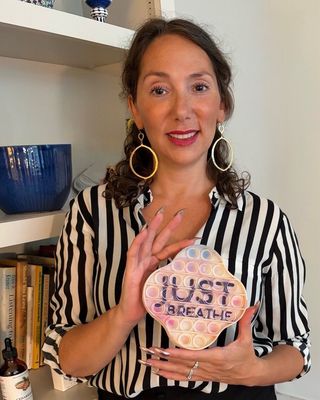
Emotionally Focused Tapping (EFT) is an incredible tool to help support a healthy connection to one’s inner life. It is very effective in developing emotion regulation, opening emotional blockages, getting to the root of negative patterns of behavior, coping with the effects of traumatic experiences, and opening ourselves up to new ideas and new ways of looking at things. Tapping groups provide a supportive community to patients as they benefit from this modality which is a well-documented and effective mixture of Eastern and Western medicine.
Keeping silent and being the good Asian or the model minority is what is often expected of us. This involves not only our own self-perception but the perception of the world and what society expects of us. We not only have our own expectations of ourselves, but this comes from our families and others. Through thoughtful questions, guidance and empathy discussions and processing will take place. This will include making art to find expression and use creativity to as an important outlet. Topics such as Intergenerational trauma, parent’s expectation, guilt, shame, and identity will be explored.

Hosted by Twenty Four Creative Art Therapy, PC.
Art Therapist, MA, ATR-BC, LCAT, MS, AMFT
Group meets in Brooklyn, NY 11211
Keeping silent and being the good Asian or the model minority is what is often expected of us. This involves not only our own self-perception but the perception of the world and what society expects of us. We not only have our own expectations of ourselves, but this comes from our families and others. Through thoughtful questions, guidance and empathy discussions and processing will take place. This will include making art to find expression and use creativity to as an important outlet. Topics such as Intergenerational trauma, parent’s expectation, guilt, shame, and identity will be explored.
See more therapy options for 11801


FAQs - About Group Therapy and Support Groups
How can I find a support group in 11801?
To find a support group in your area, start by entering your city, zip code, or the name of the group into the search bar at the top of the page. When searching, consider whether you prefer an in-person or virtual group. This can help you decide how broad your geographic search should be. If you are open to virtual groups, you might want to search by state instead of just your city, especially if there are limited options nearby.
Once you complete your search, you can use the filters to narrow the results by selecting specialties (such as grief, trauma, or eating disorders), therapeutic approaches, age groups, and other criteria to find a group that best fits your needs.
Once you complete your search, you can use the filters to narrow the results by selecting specialties (such as grief, trauma, or eating disorders), therapeutic approaches, age groups, and other criteria to find a group that best fits your needs.
How does group therapy work?
Group therapy is led by one or more trained therapists and provides a space where participants can process their experiences and learn from others facing similar challenges. Groups may focus on a specific issue—such as addiction, grief, physical illnesses, parenting, or caregiving—or they may center around a particular therapeutic approach, such as Cognitive Behavioral Therapy (CBT), social skill development, or Exposure Therapy. Some groups are also designed for specific populations, such as teens, veterans, or LGBTQ+ individuals.
It’s also important to distinguish group therapy from peer-led support groups, like Alcoholics Anonymous. While both can offer valuable support, therapy groups are typically led by licensed professionals and follow a more structured format. Therapy groups often meet for a fixed length of time with a consistent group of members, while many peer support groups meet for an indefinite period of time with members coming and going.
It’s also important to distinguish group therapy from peer-led support groups, like Alcoholics Anonymous. While both can offer valuable support, therapy groups are typically led by licensed professionals and follow a more structured format. Therapy groups often meet for a fixed length of time with a consistent group of members, while many peer support groups meet for an indefinite period of time with members coming and going.
What are the benefits of group therapy?
Group therapy offers several important benefits. It brings together people facing similar challenges—whether related to mental health, physical health, or life transitions—and creates a supportive environment where participants can exchange feedback, share experiences, and learn from one another. Hearing different perspectives can help individuals discover new coping strategies and practical tools they may not have encountered on their own. Sharing personal experiences, such as coping with a serious illness or navigating family struggles, can also reduce feelings of isolation and foster a sense of connection and understanding. In addition to emotional support, group members often gain useful, real-world advice from peers who have faced similar situations.
Group therapy is typically more affordable than individual therapy and, for certain conditions, can be equally effective. Many groups also include structured activities—such as guided journaling, cognitive-behavioral exercises, or role-playing—to help participants develop concrete skills they can apply in daily life.
Group therapy is typically more affordable than individual therapy and, for certain conditions, can be equally effective. Many groups also include structured activities—such as guided journaling, cognitive-behavioral exercises, or role-playing—to help participants develop concrete skills they can apply in daily life.
Is group therapy as effective as individual therapy?
It is difficult to make a blanket statement about the effectiveness of support groups, as they vary widely in focus and the conditions they address. However, support groups can be highly valuable in helping individuals gain emotional support and achieve meaningful treatment outcomes. For certain conditions, such as substance use, research has shown that group therapy can be particularly effective—sometimes just as effective as individual therapy—in supporting long-term recovery.
Many professionals attribute the effectiveness of group therapy to the unique benefits of the group setting, which fosters peer-to-peer learning and a sense of connection through shared experiences. Group settings also offer accountability and encouragement from both facilitators and fellow participants, which helps sustain motivation and supports continued progress. These factors together play a key role in promoting the overall effectiveness of group therapy.
Many professionals attribute the effectiveness of group therapy to the unique benefits of the group setting, which fosters peer-to-peer learning and a sense of connection through shared experiences. Group settings also offer accountability and encouragement from both facilitators and fellow participants, which helps sustain motivation and supports continued progress. These factors together play a key role in promoting the overall effectiveness of group therapy.
How much does group therapy cost?
Group therapy is typically less expensive than individual therapy, with sessions typically costing between $50 and $75 each. In comparison, individual therapy can cost anywhere from $100 to $200 or more per session, even with insurance. Some therapists or organizations offer low-cost or free group therapy options, particularly through community centers or nonprofit organizations. In some cases, groups may require payment upfront for a set number of sessions, such as paying for six weekly sessions at the first meeting. However, many providers offer payment plans to help make participation more accessible if this upfront payment is required.
Does insurance cover group therapy?
As with individual therapy, insurance coverage for group therapy varies based on factors such as your specific insurance plan, the purpose of the group, your diagnosis, and whether the group provider is in-network. Many insurance plans cover group therapy sessions that address diagnosable mental health conditions, such as substance use disorders, anxiety, or depression.
However, groups that focus on topics not directly tied to a mental health diagnosis—such as parenting support or divorce recovery—are less likely to be covered. Because coverage can vary widely, it’s important to check with your insurance provider before joining a group to confirm whether the sessions will be covered and what out-of-pocket costs you may be responsible for.
However, groups that focus on topics not directly tied to a mental health diagnosis—such as parenting support or divorce recovery—are less likely to be covered. Because coverage can vary widely, it’s important to check with your insurance provider before joining a group to confirm whether the sessions will be covered and what out-of-pocket costs you may be responsible for.
How long does group therapy last?
The length of each group therapy session typically ranges from 45 minutes to two hours, depending on the therapy approach, the group’s goals, and how often the group meets. In some cases, group therapy is part of a larger treatment program, such as an Intensive Outpatient Program (IOP), where group sessions complement individual therapy and are scheduled as part of the program’s overall structure.
The duration of participation in a group also varies. Some groups are designed to be short-term, lasting anywhere from 6 to 24 weeks—for example, bereavement groups or skills-based groups like those using Dialectical Behavioral Therapy (DBT). Other groups may be longer-term, lasting a year or more, and some ongoing support groups meet indefinitely, allowing participants to stay as long as they find the group helpful.
The duration of participation in a group also varies. Some groups are designed to be short-term, lasting anywhere from 6 to 24 weeks—for example, bereavement groups or skills-based groups like those using Dialectical Behavioral Therapy (DBT). Other groups may be longer-term, lasting a year or more, and some ongoing support groups meet indefinitely, allowing participants to stay as long as they find the group helpful.
What are the limitations of support groups?
Support groups offer many benefits, but they also have certain limitations. Unlike therapy groups, many support groups do not provide formal therapeutic treatment and are not led by licensed mental health professionals. For individuals seeking clinical treatment for specific mental health diagnoses—such as depression, eating disorders, or substance use—individual therapy or group therapy led by a licensed professional may offer more personalized and specialized care.
The effectiveness of a support group also depends heavily on the group’s participants and the overall group dynamic. When members engage respectfully and offer constructive support, the group can foster valuable peer-to-peer learning. However, if certain participants dominate discussions, provide inaccurate advice, or create conflict, it can disrupt the group’s sense of safety and reduce its effectiveness. Confidentiality can also be harder to maintain in support groups, particularly in open groups where participants can join or leave at any time. With new members regularly entering the group, it can be more difficult to build and sustain a consistent sense of trust and privacy.
The effectiveness of a support group also depends heavily on the group’s participants and the overall group dynamic. When members engage respectfully and offer constructive support, the group can foster valuable peer-to-peer learning. However, if certain participants dominate discussions, provide inaccurate advice, or create conflict, it can disrupt the group’s sense of safety and reduce its effectiveness. Confidentiality can also be harder to maintain in support groups, particularly in open groups where participants can join or leave at any time. With new members regularly entering the group, it can be more difficult to build and sustain a consistent sense of trust and privacy.