
Sleep
Why Kids Can't Sleep
Five strategies to get them sleeping, now.
Posted May 25, 2022 Reviewed by Ekua Hagan


Key points
- Seeing changes in the quality of light throughout the day appropriately programs the human body for sleep.
- Overexposure to light from screens inhibits the body's production of melatonin, a hormone that induces sleep.
- Making positive changes in children's sleep is easier when done gradually over time.
I recently met with the parents of a 7-year-old boy to discuss his daily crying in school. When I asked them to talk more about the 11 p.m. bedtime, they told me they can’t get him to bed any earlier than that, saying, “He just isn’t tired until that time.”
This type of conversation has become increasingly common in recent years. Parents often report their own sleep difficulties when discussing sleep strategies for their kids. Many of my colleagues say they’re not sure how to get a good night’s sleep anymore. Thankfully, sleep researchers have been working diligently to help answer this modern-day mystery.
How Light Impacts Sleep Quality and Duration
Recent studies suggest that our highly stimulating environment leaves many of us unable to get to sleep, stay asleep, or sleep deeply enough to reap its benefits. More specifically, it’s the overstimulation from light that can be particularly problematic.
Since light is one of the most effective ways to communicate the time of day to the body, it has a powerful influence on when we feel awake and when we feel ready to sleep. When our eyes view changes in the quality of light throughout the day, it will appropriately program our body for sleep.
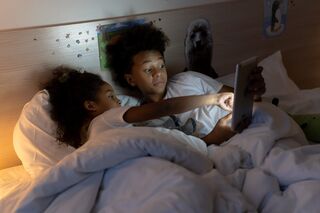
Unfortunately, increased time in front of electronic screens keeps our eyes exposed to daytime light, oftentimes for most of the day. Consequently, the body doesn't receive the message that nighttime is approaching, and the longer the exposure, the less likely the body will produce enough of the hormone melatonin to induce deep, healthy sleep.
How to Leverage the Power of Light (and Darkness) for Better Sleep
Below you will see five common sleep recommendations accompanied by an explanation of how light makes each strategy effective. Understanding the mechanism behind each strategy may help you better explain it to your family.
- Get early morning exposure to sunlight at the same time every day, even on weekends. A regular waking time that includes exposure to light is the best way to set the body’s master clock. When this master clock is synchronized, the body can consistently release the sleep hormone melatonin for a quality night's sleep.
- Spend at least 30 minutes outside every day. Sunlight helps optimize the body’s hormonal balance, which is important for sleep. Exposure to changes in natural light levels throughout the day helps the body accurately know the time of day making sleep easier to achieve. So, get the kids outside as often as possible throughout the day.
- Establish a bedtime routine that includes dimming lights in the environment and lowering brightness levels on electronics. Starting bedtime routines at least two hours before bedtime gives the body the time it needs to transition to nighttime. Bedtime routines that include low-light activities such as listening to relaxing music, talking to family members, and taking a hot bath or shower send signals to the body that it’s time for bed.
- Store all electronics out of sight during the night. Setting a curfew for electronics and having a designated charging station outside of bedroom areas will give everyone the assistance needed to keep the overstimulation from electronic lights, notifications, and activities from compromising sleep quality. This may be the most challenging strategy, and kids will need adult assistance and support to successfully make this happen.
- Reduce or eliminate exposure to stressful or overstimulating activities at night. This includes shopping in brightly lit stores, scrolling social media, or watching the news before bedtime. Research has shown that just a quick peek that exposes your eyes to the light on a phone is enough light stimulation to ruin sleep for the rest of the night.
Make Sleep a Family Affair
The current mental health crisis continues to plague youth and adults. Given that sleep is a critical ingredient for emotional and physical health, prioritizing sleep during these stressful times is more important than ever.
Consider talking with your kids first, and make small, gradual changes over time rather than making them all at once. Involving the whole family can also help since youth learn best by watching adults model healthy behaviors.
References
Huberman, A. [YouTube]. (2021, October 25). Dr. Samer Hattar: Timing Light, Food, & Exercise for Better Sleep, Energy & Mood [Video]. YouTube. https://youtu.be/oUu3f0ETMJQ
Walker, M. (2018). Why We Sleep: Unlocking the Power of Sleep and Dreams (Reprint ed.). Scribner.



