Psychiatry
A Bizarre Consequence of Having Your Appendix Removed
Can an appendectomy increase your risk of psychiatric illness?
Updated January 22, 2025 Reviewed by Gary Drevitch


Key points
- The appendix is not useless, but rather is a fallback microbial reservoir.
- Appendectomies therefore remove an important tissue, impacting the gut microbiome.
- Due to the gut-brain axis, this can affect psychiatric health in people with appendectomies.
- Alternatives to surgery are increasingly available.
“I'm sure we're going to find out one day that the brain is as worthless as the appendix.” —Scott McClanahan
The poor, maligned appendix. That worm-like accessory dangling from our intestines has long been thought to be worthless, except to doctors who charge handsomely to remove it.
But the appendix is enjoying a renaissance lately, along with its associated microbes. The appendix, it turns out, has a legitimate job: recovery from dramatic damage to the gut microbiome.
Food poisoning, antibiotics, diarrhea, and rotten diets can destroy much of the microbial diversity in the gut. Importantly, the appendix contains a reservoir of microbes that can repopulate (repoopulate?) the entire gut. The appendix is actually a kind of lymphatic gland and a major producer of IgA, an important immune factor that helps to tend our microbial garden, weeding out the bad bacteria and coddling the good ones.
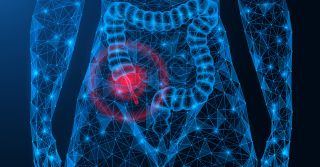
Why are we designed this way? What’s so important about gut microbes that we need a backup system?
To start with, there are some things that microbes can do that we can’t, even with our magnificent bodies and much-vaunted brainpower. For instance, vitamin B12 is not made by either plants or animals. Only bacteria can produce it. Likewise, vitamin K is largely produced by gut bacteria. Also, in herbivores, bacteria are required to convert lowly forage into energy-rich fatty acids. Over millions of years of co-evolution, we have outsourced a surprising number of jobs to "lowly" microbes.
Importantly, our gut microbes are our first line of defense against pathogens. Sure, our immune system helps, but a lot of the heavy lifting is borne by microbes that outcompete, starve, or kill pathogens—often before our immune system is even aware of them.
A compromised microbiome can allow pathogens to take over, causing your gut to leak, spreading bacteria or toxins throughout the body, including the brain. And that may be the most important job of our microbiome: protecting our brain from pathogens and their toxins. Negligence can result in brain fog and a poor mood.
Psychiatric diseases, from schizophrenia to anxiety and dementia, all have a microbial connection. This is the premise of the gut-brain axis. So, if you had your appendix taken out when you were a kid—endangering the health of your gut microbiome—might you have a higher risk of psychiatric illness?
That’s exactly what a new article in PLOS Mental Health reports. The large Swedish study of 752 people found that those who had their appendix removed as children had a 20 percent higher rate of psychiatric illness and mood disorders. Specifically, they found an increase in depression, bipolar disorder, and anxiety.
This was a serendipitous discovery; the scientists were originally looking at adhesive bowel obstruction after appendectomy. The researchers report, “It was when conducting another study that we, en passant, noticed a surprisingly high proportion of psychiatric illness in the medical charts in patients that had undergone appendectomy during childhood.”
Could the appendicitis that preceded the appendectomy be responsible for the psychiatric issues? Apparently not. The researchers teased out the data for people who had appendicitis but no appendectomy and found no increase in psychiatric risk. The researchers were also able to eliminate the influence of general anesthesia on psychiatric risk.
Because of this freshly discovered link, the authors urge doctors to consider alternatives to surgery. They report, “The findings are in favor of the conservative treatment of appendicitis whenever possible. As appendicitis is the most common surgical emergency during childhood, this association could have a substantial impact on global mental health.”
Fortunately, clinical trials are looking at antibiotics to treat appendicitis as a way to avoid appendectomy. Some appendicitis cases can be successfully treated by antibiotics, although the success rate has recently been called into question.
However, the use of antibiotics is not without side effects of its own, often damaging the very microbiome the appendix is sworn to protect. Luckily, antibiotics appear to help enough that the appendix can rebound in time to resuscitate the rest of the microbiome.


Still, over 90 percent of appendicitis patients today continue to get appendectomies. The scalpel yet rules. In medicine, progress can often be exasperating, with eminence often trumping evidence. This study could help move the needle.
Interestingly, recent research shows that appendicitis is caused by disturbances in the gut microbiome, and that the worst cases involve displaced oral microbes, including Fusobacterium, ˆPorphyromonas, and Parvimonas. That means that we might prevent appendicitis by better tending our gut and oral microbiome. In particular, we might try to boost butyrate-producing microbes like Ruminococcus that help to heal and nourish the cells lining the gut, including the appendix.
More research is needed, but increasing the amount of fiber in our diet might improve our odds of avoiding appendectomy. That’s a small price to pay for avoiding unnecessary psychiatric disease.
Facebook image: AShvets/Shutterstock. LinkedIn image: PaeGAG/Shutterstock
References
Håkanson, Cecilia Arana, Fredrik Stiger, Nele Brusselaers, and Helene Engstrand Lilja. “Childhood Appendectomy and Subsequent Psychiatric Illness.” PLOS Mental Health 2, no. 1 (January 16, 2025): e0000219.
Girard-Madoux, Mathilde J. H., Mercedes Gomez de Agüero, Stephanie C. Ganal-Vonarburg, Catherine Mooser, Gabrielle T. Belz, Andrew J. Macpherson, and Eric Vivier. “The Immunological Functions of the Appendix: An Example of Redundancy?” Seminars in Immunology, Redundancy and Robustness in Immunity, 36 (April 1, 2018): 31–44.
ACS. “Most Patients with Appendicitis Can Have Antibiotics as Their First Treatment, Rather Than Appendectomy.” Accessed January 19, 2025.
Blohs, Marcus, Alexander Mahnert, Kevin Brunnader, Christina Flucher, Christoph Castellani, Holger Till, Georg Singer, and Christine Moissl-Eichinger. “Acute Appendicitis Manifests as Two Microbiome State Types with Oral Pathogens Influencing Severity.” Gut Microbes 15, no. 1 (n.d.): 2145845.