
Coronavirus Disease 2019
Should You Prep for Supply Chain Shortage? Updated 4/15/20
Buying a few key items can provide peace-of-mind.
Posted April 4, 2020 Reviewed by Kaja Perina


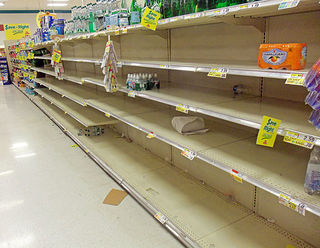
As I wrote in my post yesterday on how to create a Corona Victory Garden, experts, as reported in publications such as the New York Times and The Atlantic, are worried about possible supply-chain shortages. Today, a Reuters headline is “Coronavirus upends global food supply chains in latest economic shock." Update 4/15/20: Input manufacturer lead times tripled in just the last two weeks of March, the latest period studied.
Just as most of us buy insurance, for example, medical or fire insurance, here is what you might buy as “supply-chain insurance."
First, a clarification: Prepping doesn’t mean hoarding. Buy what you need for a month, then supplement with small purchases as needed.
Water. This is the true staff of life: You can live without food for weeks, but without water, you die in a few days. There are many reasons why the water supply could be interrupted but the most likely is that utility companies' water pumps and parts break. Water delivery to your home could stop if, because of pandemic illness, there are insufficient workers at manufacturing plants, on any delivery mode in the supply chain, and at water-utility sites to repair these complex systems. Also, water utilities are dependent on electricity. If a similar problem hits electrical utility companies, it would also keep the water utilities from delivering water to your home. A chain is only as strong as its weakest link.
The U.S. Department of Homeland Security recommends that you keep on-hand at least one gallon per day per person. So if you're a family of 4 and want to plan for a week's lack of water, you'll need at least 28 gallons. If you don't want to lug that many jugs of water from the supermarket, you might invest in a set of 5-gallon food-grade ones, for example, the Amazon top-rated Saratoga Farms'.
Food. Have a month’s worth of healthy food with good shelf life, for example, canned and frozen fruits and vegetables, peanut butter, crackers, pasta, and trail mix.
Medications. Here, go beyond a month: Have a 90-day supply.
First aid kit. Consider the Red Cross's Deluxe Kit ($35).
Hand-crank/solar radio/flashlight. The Amazon top-rated Running Snail ($58) in addition to AM/FM radio, shortwave and bright flashlight, connects you to seven federal disaster channels. And just one-minute of cranking gets you 15+ minutes of radio, 30 minutes of light.
Motor oil. If your car’s engine burns oil, having an extra quart or two can ensure your car will continue to be available.
A "too-big-to-fail" internet and cell phone provider. It takes many people to keep the internet running. If too many get sick or are prohibited from coming to work, your internet and email access may become less reliable or even stop. So, you might want to get your internet and cell phone service from a provider that’s perhaps too big to fail: for example, Comcast, AT&T, Verizon, or Charter.
Cash. If you have that much, have $1,000 in cash, just in case, for example, for barter with neighbors. And if electricity goes down, so might ATMs and credit-card processing.
The takeaway.
All of us would prefer to assume things will get better soon, but moderate preparedness for a supply-chain shortage may be wise.
I read this aloud on YouTube.