
Neuroscience
What Is It Like to Be Conscious?
The irreducible subjectivity of our psychology.
Posted October 25, 2024 Reviewed by Hara Estroff Marano


Key points
- The question touches the heart of the science of consciousness in its irreducible subjectivity.
- We need a science that gives equal value to the inner and outer perspective.
- The question brings us directly to the roots of our psychological well-being.
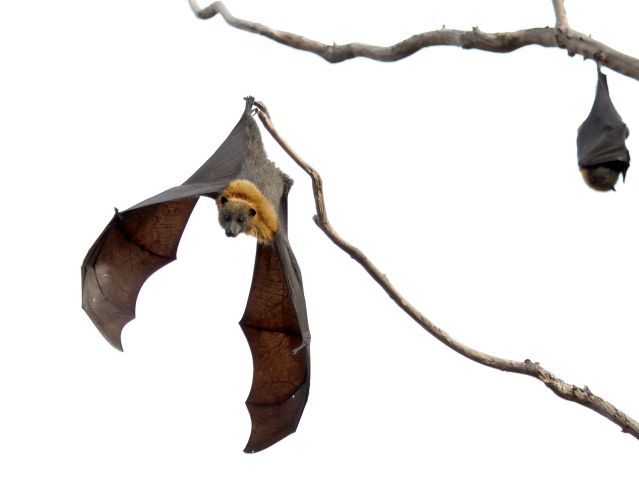
Fifty years ago, Thomas Nagel famously asked: "What Is It Like to Be a Bat?" (October, 1974) Oxford University Press has republished the philosophical paper of that title in book form with an additional article. We still cannot answer that question. We still do not have the imagination to consider what it would be like to be a life form with different senses and different behavior.
Nevertheless, much has happened in the study of consciousness. Neuroscience has produced an enormous amount of research on consciousness in search of an objective theory of consciousness. There is an extraordinary amount of knowledge about how the brain works, but there is still no unified theory of consciousness.
It seems to me that this is because consciousness is primarily a first-person perspective, a subjective experience. Hence my question here: What is it like to be conscious? The search for an answer to the question is much older than recent neuroscience.
It is a question that runs through human history, a quest often categorized as spiritual rather than scientific. It is a question that remains particularly relevant—especially today, when many technocrats try to artificially replace our consciousness with algorithms.
It is also particularly relevant because, for several years now, we have been confronted daily with images of bombed-out buildings in more and more cities. The subjective experience of the phenomenon of destruction is one of the deepest tragedies of human suffering. The end of such tragedy is not yet in sight.
What it is like to be conscious is about the ability that is certainly the most complexly developed in the human species but definitely does not belong only to humans. It is also the capacity whose developmental potential we have only just begun to exploit. Consciousness development is not yet on the daily agenda of most people.
I can't imagine what it must be like to be a bat. But I can imagine what it must be like to be a human being with consciousness. I have this knowledge firsthand, from the inside, I can experience it directly. This brings us to the phenomenology of consciousness.
What Is it Like to Be Human?
In his famous article, Nagel wanted to confront us with the irreducible subjectivity of consciousness. Can consciousness be reduced to the workings of the brain or, more broadly, to the bioelectrical workings of the cell?
Can consciousness be understood from a purely materialistic worldview? Do we need to revise our phenomenology to make it compatible with materialism? Or do we need a new perspective?
Is the description of the physical sciences still incomplete? Carlo Rovelli, one of the scientists at the forefront of quantum research, believes that we need a new perspective. (Rovelli, 2021) Many psychologists believe that we need a new viewpoint that can go beyond the old dualism. The old paradigm seems to have reached a dead end. The way forward is possible only by giving equal value to the inner and outer perspectives. (De Vleeschauwer, 2022, 2023, 2024)
Fransisco Varela was one of the first, along with Evan Thompson, to lay an inspiring foundation for this new paradigm: neurophenomenology. This new paradigm requires a new kind of scientific researcher: one who is trained in both perspectives. Academic training is still biased toward third-person observations. It requires equally long training in both perspectives. (Varela, 2016)
Someone who fulfils these conditions is consciousness researcher Thomas Metzinger. He has recently connected more than 500 accounts of advanced first-person perspectives in a promising publication. Like Evan Thompson, he is an advanced observer of the phenomenology of consciousness. (Metzinger, 2024; Thompson, 2007)


The Need to Go Beyond the Old Dualism
The question, "What is it like to be conscious?" is a burning one, because the answer can change our worldview. The direct answer to the question can be given only by you. And to answer it, you need to be able to focus your attention inward in a stable way. With a mind that jumps wildly from one thought to another, it will be difficult. You need a clear mind.
The answer is important because it is closely related to the ethical choices we make. If we can imagine what it is like to be a human being and how suffering feels, then it will be much harder to tolerate the bombs being dropped around the world. We know the tragic suffering that comes with the feeling of one's own body being destroyed, even more so when imagining what it must feel like to see your children or grandchildren suffering unbearably.
What it feels like to be conscious is not a neutral question. It is a question of who we are as human beings. The answer can motivate us to move beyond the old dualism.
In a world that seems stuck in ever-increasing polarizations, this is quite relevant: it is precisely the old dualism that keeps us trapped in our evolution as human beings. More than ever, humanity is divided over its solutions.
The question of what it is like to be conscious forces us to step out of the old paradigm and look for another perspective that is clear and coherent. It is the question that has been central to most of my writings over the past few years, and will continue to be.
With an open mind, we look at the roots of the new paradigm that is growing. Whether it has a chance to become strong will depend on our old habits of dualistic polarization. It is a question that is particularly relevant to psychology today, a question that confronts us with the roots of our deepest emotions, the power of our motivations, the attachment to our cognitions, and the source of our psychological well-being: What kind of human do we want to become?
References
De Vleeschauwer, P. (2022) Emotions and Consciousness Emerge Only from a Living Body. New York, Psychology Today.
De Vleeschauwer, P. (2023) How Consciousness Embodies All that Matters. New York, Psychology Today.
De Vleeschauwer, P. (2024) Life and Emotion in the Making of Consciousness. New York, Psychology Today.
Metzinger, T. 2024). The Elephant and the Blind. The Experience of Pure Consciousness. Massachusetts, MIT Press
Nagel, T. (2024). What Is it Like to Be a Bat? New York NY, Oxford University Press.
Rovelli, C. (2021). Helgoland. UK: Allen Lane.
Thompson, E. (2007). Mind in Life. Biology, Phenomenology, and the Sciences of Mind. Cambridge MA, Harvard University Press.
Varela, F.J., Thompson, E., Rosch, E. (2016). The Embodied Mind. Cognitive Science and Human Experience. Cambridge MA, MIT Press.