
Animal Behavior
Monkey Matchmaking and Why It Matters
Understanding the personalities of captive animals could improve their welfare.
Posted January 14, 2026 Reviewed by Lybi Ma


Key points
- Personality similarity between pair-bonded humans can increase compatibility and well-being.
- Similar personalities may also be beneficial for social animals living in pairs in captivity.
- Researchers studied the personalities of pairs of captive titi monkeys, a socially monogamous primate.
- Knowledge of captive animals’ personalities could inform decisions to improve their well-being.
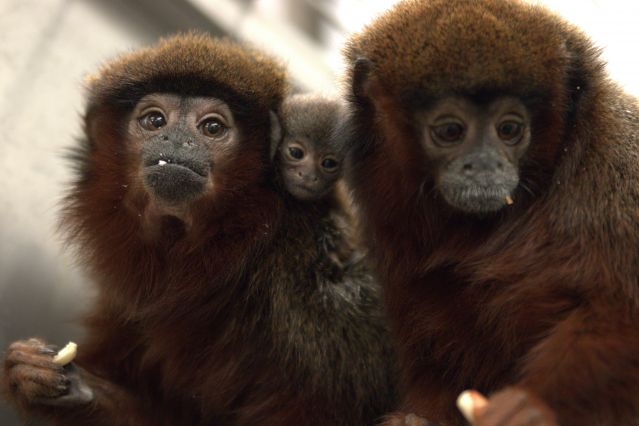
Institutions that keep captive primates, like zoos or research laboratories, are responsible for the welfare of the animals in their care. This includes providing a stimulating environment, a healthy diet, and crucially, social connection. However, will any partners do?
When it comes to human relationships, personality matters; personality similarities in couples are not only common, they’re linked to better compatibility, increased well-being, and other positive outcomes.
A better understanding of primate personality could help improve the lives of primates in human care, says Pauline Zablocki-Thomas, a primatology and ethology researcher at Nantes Université in France. However, little is known about personality and social relationships in many primates, especially the few species that form pair bonds.
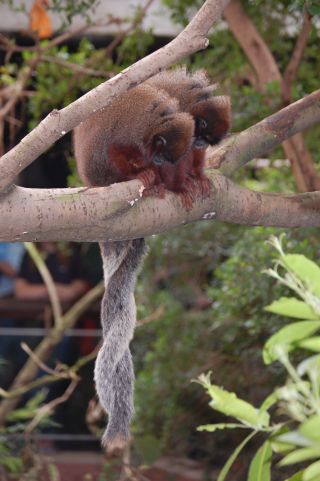
Pair Bonding Primates
University of California at Davis psychologist Karen Bales studies the neurobiology and physiology of pair bonding in socially monogamous animals, including captive coppery titi monkeys (Plecturocebus cupreus) housed at the California National Primate Research Center (CNPRC). In the wild and in captivity, pair-bonded titi monkeys spend time in close physical contact, often with their long tails intertwined.
As a postdoctoral researcher in Bales’ lab, Zablocki-Thomas led an effort to study the personality of 27 pairs of titi monkeys housed at the CNPRC. She and her colleagues used a tool for studying personality in great apes and other primates, the Hominoid Personality Questionnaire (HPQ), in which raters score 54 items on a 7-point scale.
“Using the HPQ with titi monkeys is tricky because, unlike chimpanzees or macaques, they don’t have a lot of facial expressions,” says Zablocki-Thomas. “It’s hard to know titi monkeys well. You need to spend time with them.”
After many hours of observation and ratings, the team identified five components to describe the titi monkey personality structure: aggressive, cool, cautious, innovative, and helpful. They used these components as a framework to characterize the different personality traits exhibited by the monkeys.
Personality in Couples
Zablocki-Thomas and colleagues found one notable sex difference in personality: male titi monkeys were more helpful than females. This is likely related to the high level of paternal care provided by titi monkey fathers. The father carries the infant on his back at all times, except when the baby nurses from its mother.
When the researchers analyzed personality traits within titi monkey couples, they found that two traits — aggressive and helpful — were positively correlated between partners. This indicates that, for these two personality traits, partners were more similar to each other than to other members of the colony, on average.

One surprising finding was a negative relationship between the helpful trait and the time since pairing; older couples tended to be less helpful than younger couples. This could mean that individuals within a couple may become less helpful over time.
In addition, the researchers investigated personality similarity in six titi monkey pairs that were created based on initial compatibility, determined in what they call a “speed-dating” experiment.
“The idea was to let them choose between potential mates, which is pretty rare in captivity,” says Zablocki-Thomas. “We did preference tests and based on the time spent next to one individual or another and other behaviors, we got an idea of which one the focal animal prefers.”
The team found that pairs who were matched after speed-dating had higher levels of helpfulness than other pairs in the colony.


Welfare Applications
These findings may have implications for the fitness and well-being of captive titi monkeys, but further longitudinal research is needed. Future studies could explore how personality similarity in bonded titi monkeys impacts relationship quality, reproductive success, and survival.
Ultimately, Zablocki-Thomas hopes such research could be used to determine good matches when pairing individuals and otherwise contribute to improving captive titi monkey care.
“Knowing the personality of individuals in captivity is important,” she says. “We need to provide captive animals with the best environments we can so they can be happy, and this includes their social environment.”

References
Rebout, N., Baxter, A., Bales, K. L., & Zablocki-Thomas, P. (2025). Exploring personality structure and similarity in coppery titi monkeys (Plecturocebus cupreus). Journal of Comparative Psychology, 139(4), 301–314. Doi: 10.1037/com0000407.