Animal Behavior
How Rewilding With the Beauty of Birds Can Heal Our Planet
Dr. LoraKim Joyner explains how birds can inspire healing and hope.
Updated October 1, 2025 Reviewed by Davia Sills


Key points
- Dr. Joyner offers hope to a world where biodiversity loss, climate change, and pandemics threaten us all.
- Her book recognizes multispecies intelligence as a scientific discipline and mindfulness practice.
- Transformative conservation includes emotional, social, multispecies, ecological, and spiritual intelligences.
- It can help change the mindset of how we engage with birds, other animals, and one another.

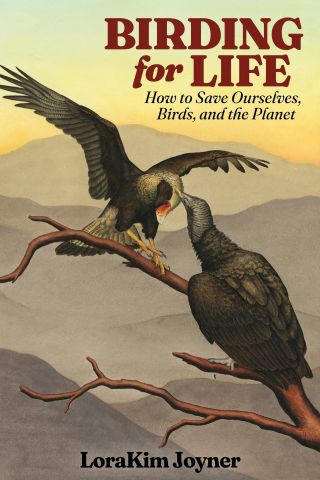
Birds are among the most common animals that numerous people around the world are able to see and hear in diverse habitats. The loss of birdsong was among the reasons why Rachel Carson’s classic Silent Spring had such an enormous impact and is thought to be the beginning of the current environmental movement. As such, birds can help connect us to their worlds and those of other animals and help us understand the profound effects we can have on the well-being and health of our magnificent planet. This is one of the many reasons why I found veterinarian Dr. LoraKim Joyner’s recent book Birding for Life: How to Save Ourselves, Birds, and the Planet to be an important, inspirational read.
Marc Bekoff: Why did you write Birding for Life?
LoraKim Joyner: My relationships with birds since I was a small child have been transformative, both in terms of how I see the world and also in how I serve the Earth. I wished this joy, this sense of belonging, and this ability to care for Earth and Earth’s beings for others.
Mostly, I desired to have more people connected to each other in a common experience and understanding of other species, so humanity could do more to cherish and protect birds. This book aims to help humans understand birds and spend time with them, so that they can see them as having dignity, feelings, and needs, and social complexity that we are only beginning to discover.
Birds need us to be our best selves because their numbers are plummeting, and there is tremendous suffering in the wildlife trade and with birds in captivity. As a wildlife veterinarian working for nearly 40 years in Central and South America, I have witnessed the tremendous tragedy of the parrot trade, and I want it to stop. Perhaps if people can see birds for who they really are, we would not imprison them or ourselves. My hope was that people could see that none are free until all are free.
I wrote this book to help humans. We are so beautiful—and we need to take care of ourselves and understand ourselves, because if we push away who we are and don’t welcome our own kind, we can’t care as well as we could for other species. Birds and people must flourish together.
To achieve this, we need to be curious about the motivations, feelings, and needs of all species (multispecies intelligence), and this includes humans. Multispecies intelligence helps us accept who we are, as well as to see deeply into the lives of others. Multispecies intelligence is a scientific discipline and mindfulness practice. The more time we spend being open to birds and to ourselves, the more we open to the beautiful and tragic, and with that acceptance comes an embodied response to serve life.
MB: Who do you hope to reach?
LJ: Everyone? I want as many people to see the joy and wonder and, yes, the suffering and tragedy of other species so that we can flourish as well as all of life.
The book will appeal to people who wish to begin birding and don’t know much about it. They just know that they find birds beautiful and meaningful in their lives. This book is a guide not just for the beginner, but for the more experienced naturalist who, like me, with intentionality and community, can grow resilience, love, and care.
I also think the book could appeal to anyone who desires tools to deepen and expand their communities of care. By caring for other species, we can be embraced in turn. This welcoming sense of our place in the world helps us welcome others by providing a space where they also can flourish.
MB: What are some of the main topics you consider, and what are some of your major messages?
LJ: To complement the wisdom and experiences of the reader, I share a framework that guides my work in transformative conservation, five natural intelligences: emotional, social, multispecies, ecological, and spiritual. All of us can grow each of these natural intelligences, and the stories, theories, science, and practices in this book help us to do so.
Science and ecology are interspersed with the stories to deepen our understanding of birds so that we can see that they are not to be treated as objects, but as worthy others with a dignity that does not depend on human perceptions. Humanity needs to radically transform how we relate to others because birds are in so much trouble.
In summary, then: Humans are part of a web of tragedy and beauty, and if we can embrace the reality of ourselves and our lives in terms of relationships with other species, we can be embraced in turn.
MB: How does your work differ from others that are concerned with some of the same general topics?
LJ: Bird behavior, birding, and the benefits of birding are popular topics, as is the state of the world’s birds. This book connects these activities and topics through the purposeful use of multispecies intelligence, a concept not previously explored. This type of intelligence, along with the other four, is deeply rooted in the principles of Nonviolent Communication—a framework that has yet to be explicitly used in multispecies relationships. This work also relies heavily on science, psychology, and human experience in a way where humans are seen as perfect, but whose improving perfection can transform themselves and the world.


MB: Are you hopeful that, as people learn more about these remarkable beings, they will treat them with more respect, dignity, and compassion?
LJ: Ah, hope. I have seen an amazing transformation in people who spend time with birds. So yes, I do believe that being with birds helps us treat them better, and ourselves as well.
Will enough of us not just see the light of unconditional solidarity but embody it in daily action to reverse the catastrophes befalling the Earth? I don’t know. But we must try, for I have faith that life is beautiful and meaningful, and it matters what we do, regardless of the outcome.